Do you get through the working week on toast, coffee and whatever is left in the fridge, and wonder how much fresh fruit you really eat? It matters more for vitamin C than for most nutrients, because the NHS says the body cannot store it, so you need it every day [2]. UK law is clear about why: vitamin C contributes to the reduction of tiredness and fatigue and to the normal function of the immune system [1]. Few fruits hold more of it than acerola, a small red cherry of the tropical Americas with around 50 to 100 times the vitamin C of an orange [3].
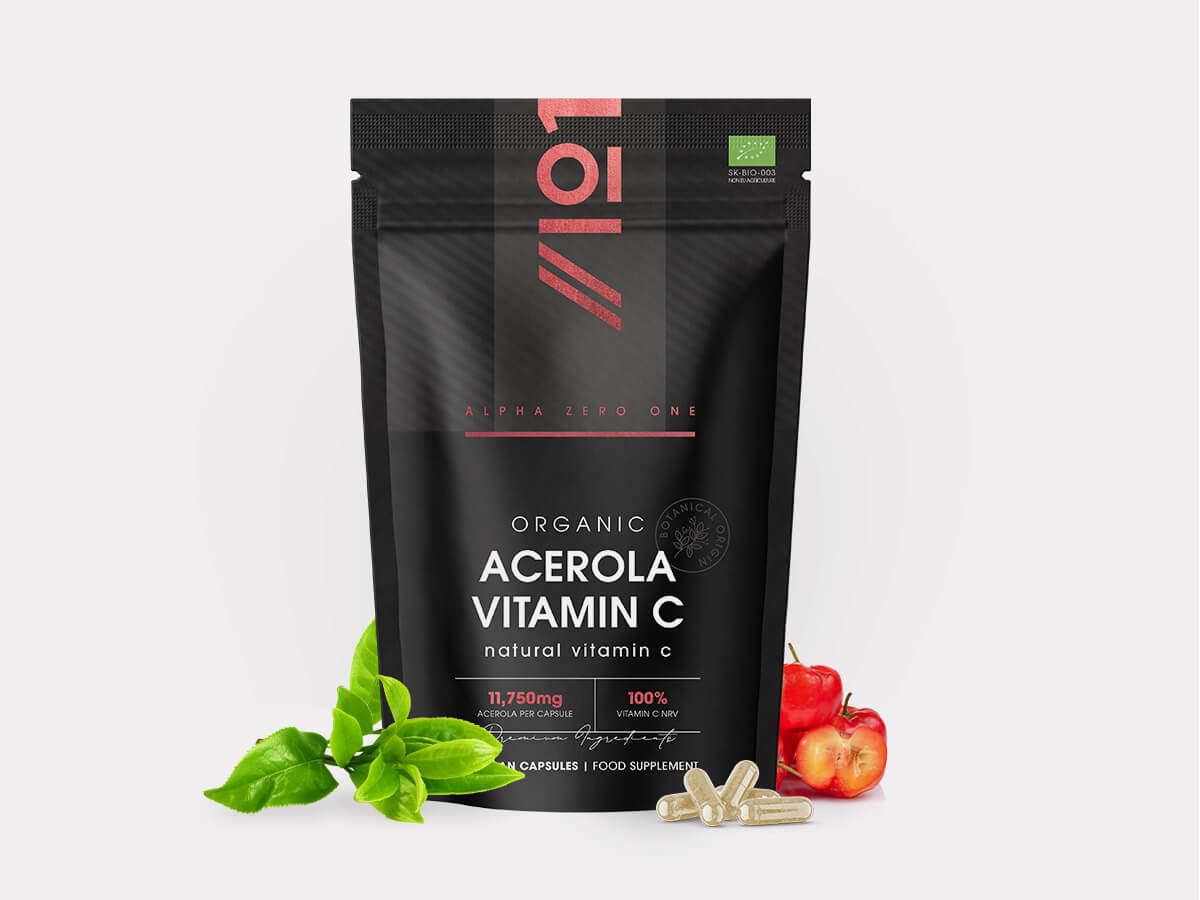
Wondering which acerola capsule to choose? It’s simple once you know what the two numbers on our organic pouch mean: 11,750mg on the front is the acerola fruit behind each capsule, and 80mg on the back is the vitamin C that capsule gives you [4]. This guide shows how the two fit together, what each of our two acerola capsules gives you, and which one suits your day.
Acerola cherry capsules at a glance
- Who it suits: adults who want their daily vitamin C from a certified organic fruit extract.
- What is authorised: vitamin C contributes to the reduction of tiredness and fatigue and to the normal function of the immune system [1].
- One capsule: 470mg of organic 25:1 acerola extract, giving 80mg of vitamin C, 100% of the daily reference.
- The 11,750mg: the weight of acerola fruit concentrated 25:1 into the 470mg of extract in each capsule [4].
- Format: a vegan hypromellose capsule with three ingredients, once a day with water.
- Price: £8.99 for 90 capsules, three months at about 10p a day.
ORGANIC ACEROLA CHERRY 11,750MG · 90 VEGAN CAPSULES
£8.99 · 90 servings · 1 capsule daily with water · vitamin C 80mg, 100% NRV, from certified organic 25:1 acerola extract · about 10p a day
SHOP NOW
Acerola vitamin C 80mg or 260mg: which is right for you?
We have two acerola capsules. Both take their vitamin C from acerola extract, but they differ in the amount per serving and in the price a day.
Organic acerola: exactly the daily reference amount
If you want your vitamin C from a certified organic fruit, our Organic Acerola Cherry gives 80mg in one capsule, which is 100% of the daily reference. A pouch lasts three months at about 10p a day.
Acerola capsules with 260mg: more vitamin C per penny
If you would like more, our Acerola Vitamin C 260mg gives 260mg in two capsules, 325% of the daily reference, for about 18p a day. That works out at about 7p for every 100mg of vitamin C, and a pouch lasts 45 days.
ACEROLA VITAMIN C 1000MG AND 260MG · 90 VEGAN CAPSULES
£7.99 · 45 servings · 2 capsules daily with water · vitamin C 260mg, 325% NRV, from acerola extract · about 18p a day
SHOP NOW
Here are the two labels side by side. Prices are correct at the time of writing.
1 capsule · 470mg of organic 25:1 acerola extract, equal to 11,750mg of fruit · vitamin C 80mg, 100% NRV · certified organic · vegan capsule
Choose if you want exactly the daily reference amount from a certified organic fruit extract · 90 days · £8.99: about 10p a day
2 capsules · acerola extract 1,000mg at 26% vitamin C · vitamin C 260mg, 325% NRV · vegan capsule
Choose if you want more vitamin C per serving and per penny · 45 days · £7.99: about 18p a day
Other vitamin C supplement formats: liposomal, with zinc or gummies
Both acerola capsules sit in our acerola cherry range and our vitamin C range. If you’re exploring other formats, that range holds three more ways to take vitamin C, and all three also sit in our wider vitamins range.
Our Liposomal Vitamin C 1000mg gives 1,000mg in two capsules, 1,250% of the daily reference [4]. Our liposomal vitamin C guide explains what liposomal means.
Our Vegan Vitamin C & Zinc 1200mg pairs 1,200mg of vitamin C with 40mg of zinc in two capsules, and our chewable Vitamin C Gummies give 200mg in two gummies [4]. Our vitamin C and zinc guide compares these two.
Taking acerola vitamin C with a multivitamin
Already taking a multivitamin? Our multivitamins give 40mg to 90mg of vitamin C a day, alongside their other vitamins and minerals [4]. A serving of acerola simply adds a further 80mg or 260mg to your daily wellbeing routine.
How much vitamin C do you need? What the NHS says
The NHS says adults aged 19 to 64 need 40mg of vitamin C a day [2]. It names oranges, peppers, strawberries, blackcurrants, broccoli, Brussels sprouts and potatoes among the good sources [2].
“Vitamin C cannot be stored in the body, so you need it in your diet every day.”
Vitamins and minerals: vitamin C, nhs.uk [2]
Acerola cherry 11,750mg on the label: fruit, extract and vitamin C
Three numbers on the label tell the story of one capsule. The 25:1 on the panel is the extract ratio, which means 25 parts of fruit were concentrated into 1 part of extract.
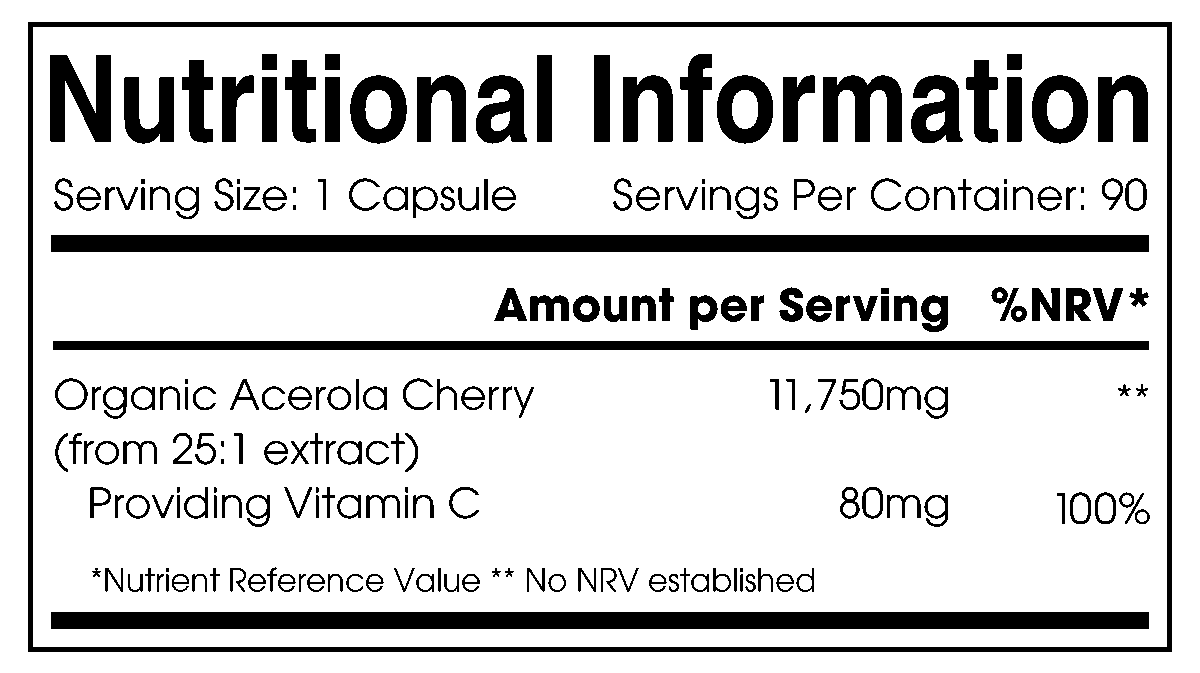
11,750mg of fruit ÷ 25 = 470mg of extract in the capsule · 470mg × 17% = 80mg of vitamin C · the daily reference for vitamin C is 80mg, so 80mg = 100% · £8.99 ÷ 90 = about 10p a day.
Organic Acerola Cherry 11,750mg, nutrition panel and ingredients [4]
So the 11,750mg is a fruit equivalent, not the weight of what you swallow. The capsule holds 470mg of extract, and the ingredients list says it is standardised to 17% vitamin C, which is where the 80mg comes from.
Acerola extract: why the fruit is so rich in vitamin C
Acerola, Malpighia emarginata, is one of the richest natural sources of vitamin C known. A published review puts the fresh fruit at 1,500 to 4,500mg per 100g, around 50 to 100 times the level in an orange or a lemon, and notes that Brazil has built a whole industry around it [3].
Organic acerola: what the leaf on the pouch covers
The green leaf on the front is the EU organic logo, printed with the control code SK-BIO-003 and the words non-EU agriculture. The ingredients list has three items: the organic acerola extract, the hypromellose shell and organic brown rice flour. That is why the capsule sits in our organic range and, as a fruit extract, in our herbal supplements range.
Vitamin C benefits: the claims UK rules authorise
In the UK a food supplement may carry only the health claims authorised on the Great Britain Nutrition and Health Claims Register [1]. Every claim below belongs to the vitamin C each label declares. A vitamin C claim needs 15% of the reference value, which is 12mg, and both our capsules are far above it [1].
Every health claim on the Great Britain register passed a scientific review: independent scientists examined the research and the evidence behind it before it was authorised [1]. The law itself says that health claims shall be “based on and substantiated by generally accepted scientific evidence” [5].
Acerola vitamin C claims, word for word
- Vitamin C contributes to the reduction of tiredness and fatigue.
- Vitamin C contributes to the normal function of the immune system.
- Vitamin C contributes to the protection of cells from oxidative stress.
- Vitamin C contributes to normal energy-yielding metabolism.
- Vitamin C contributes to normal functioning of the nervous system.
- Vitamin C contributes to normal psychological function.
- Vitamin C contributes to normal collagen formation for the normal function of skin.
- Vitamin C contributes to normal collagen formation for the normal function of bones.
- Vitamin C contributes to normal collagen formation for the normal function of cartilage.
- Vitamin C contributes to normal collagen formation for the normal function of gums.
- Vitamin C contributes to normal collagen formation for the normal function of teeth.
- Vitamin C contributes to normal collagen formation for the normal function of blood vessels.
- Vitamin C contributes to the regeneration of the reduced form of vitamin E.
- Vitamin C increases iron absorption.
These sentences describe vitamin C’s role in the body’s normal function. They describe the everyday work vitamin C does, and they apply in full to both capsules.
One more claim is authorised for foods that give 200mg of vitamin C a day, and our Acerola Vitamin C 260mg does: Vitamin C contributes to maintain the normal function of the immune system during and after intense physical exercise. The register asks for this note beside it: the beneficial effect is obtained with a daily intake of 200mg in addition to the recommended daily intake of vitamin C [1].
How to take acerola capsules
The organic label says one capsule daily with water and the 260mg label two capsules, and neither names a time of day [4]. Because vitamin C increases iron absorption, some people take it with a meal, and that is a routine choice, not a rule.
A day’s vitamin C from an organic fruit, about 10p
If you want your daily vitamin C from certified organic acerola, one capsule gives the full reference amount and a pouch covers three months.
SHOP ORGANIC ACEROLA VITAMIN C
Acerola cherry FAQs
1. What are the benefits of acerola cherry capsules?
The benefits UK law authorises belong to the vitamin C each capsule declares: vitamin C contributes to the reduction of tiredness and fatigue and to the normal function of the immune system, among the fourteen sentences in the list above [1].
2. Is natural vitamin C from acerola different from ascorbic acid?
It is the same vitamin C, with the same authorised claims [1]. What acerola adds is the source: vitamin C from a fruit and, in our organic capsule, from a certified organic one.
3. Is the acerola cherry 11,750mg the amount of vitamin C?
It is the weight of acerola fruit concentrated 25 to 1 into the 470mg of extract in each capsule, and that extract gives the 80mg of vitamin C on the panel, 100% of the daily reference [4].
4. How much vitamin C do I need a day?
The NHS says adults aged 19 to 64 need 40mg a day [2]. Our capsules give 80mg or 260mg, and the NHS says taking less than 1,000mg of vitamin C supplements a day is unlikely to cause any harm [2].
5. Are organic acerola capsules vegan?
Yes. The shell is plant-derived hypromellose, and the other two ingredients are organic acerola extract and organic brown rice flour. Both of our acerola capsules sit in our vegan range.
6. Can I take acerola vitamin C every day?
Yes. Each label gives a daily amount, one capsule of the organic or two of the 260mg, so they are made for daily use; just don’t take more than the label says [4]. The NHS notes that the body cannot store vitamin C, which is why it is a daily nutrient [2].
7. Which has more vitamin C, acerola or an orange?
Weight for weight, acerola. A published review puts the fresh fruit at around 50 to 100 times the vitamin C of an orange or a lemon [3].
8. Can children take acerola cherry capsules?
The label says the capsules are not suitable for use by children, and asks you to consult your doctor before use if you are pregnant, breastfeeding, have a medical condition or take prescription medication [4].
If you want exactly the daily reference amount from a certified organic fruit, take the Organic Acerola Cherry at about 10p a day. If you’d like more vitamin C in each serving, choose the Acerola Vitamin C 260mg at about 18p a day, or about 7p per 100mg. Whichever you pick, the fourteen vitamin C sentences in the list above come with it, one capsule or two a day.
References
Checked against the product labels, the GB Nutrition and Health Claims Register and nhs.uk, September 2026.
[1] Department of Health and Social Care. Great Britain nutrition and health claims (NHC) register, GOV.UK (vitamin C: fourteen authorised health claims for a source of vitamin C and the exercise claim at 200mg a day, with their conditions of use). Accessed 2026-09-28. View Source
[2] Vitamins and minerals: vitamin C – NHS. Accessed 2026-09-20. View Source
[3] Prakash A, Baskaran R. Acerola, an untapped functional superfruit: a review on latest frontiers. Journal of Food Science and Technology. 2018;55(9):3373-3384. View Source
[4] Alpha01. Organic Acerola Cherry 11,750mg (90 capsules) and Acerola Vitamin C 1000mg and 260mg (90 capsules): pouch fronts, nutritional information panels, ingredients, suggested use, caution and prices; nutrition panels of Liposomal Vitamin C 1000mg, Vegan Vitamin C and Zinc 1200mg, Vitamin C Gummies and our multivitamins (vitamin C per daily serving). Label maths by the author. Accessed 2026-09-28. View Source
[5] Regulation (EC) No 1924/2006 on nutrition and health claims made on foods, Article 6: scientific substantiation for claims, as it applies in Great Britain. legislation.gov.uk. Accessed 2026-09-25. View Source


