The rich, reddish hue of wild salmon and the vibrant pink of a prawn come from a pigment they get from their diet [2]. This pigment, astaxanthin, is naturally made by a microalga called Haematococcus pluvialis [2]. When you look at a supplement pouch, however, you will often find two different numbers listed, which can cause some confusion. One figure represents the total amount of algae oil, whilst the other shows the quantity of astaxanthin itself. Understanding the difference is key to knowing what you are taking, which is why this guide decodes the 160mg of algae oil listed on our label [4].
Choosing a dietary supplement can feel like a complicated task, with so many different labels and numbers to compare. This guide explains what the 8mg and the 160mg mean, what the softgel is made of and which pouch suits your routine.
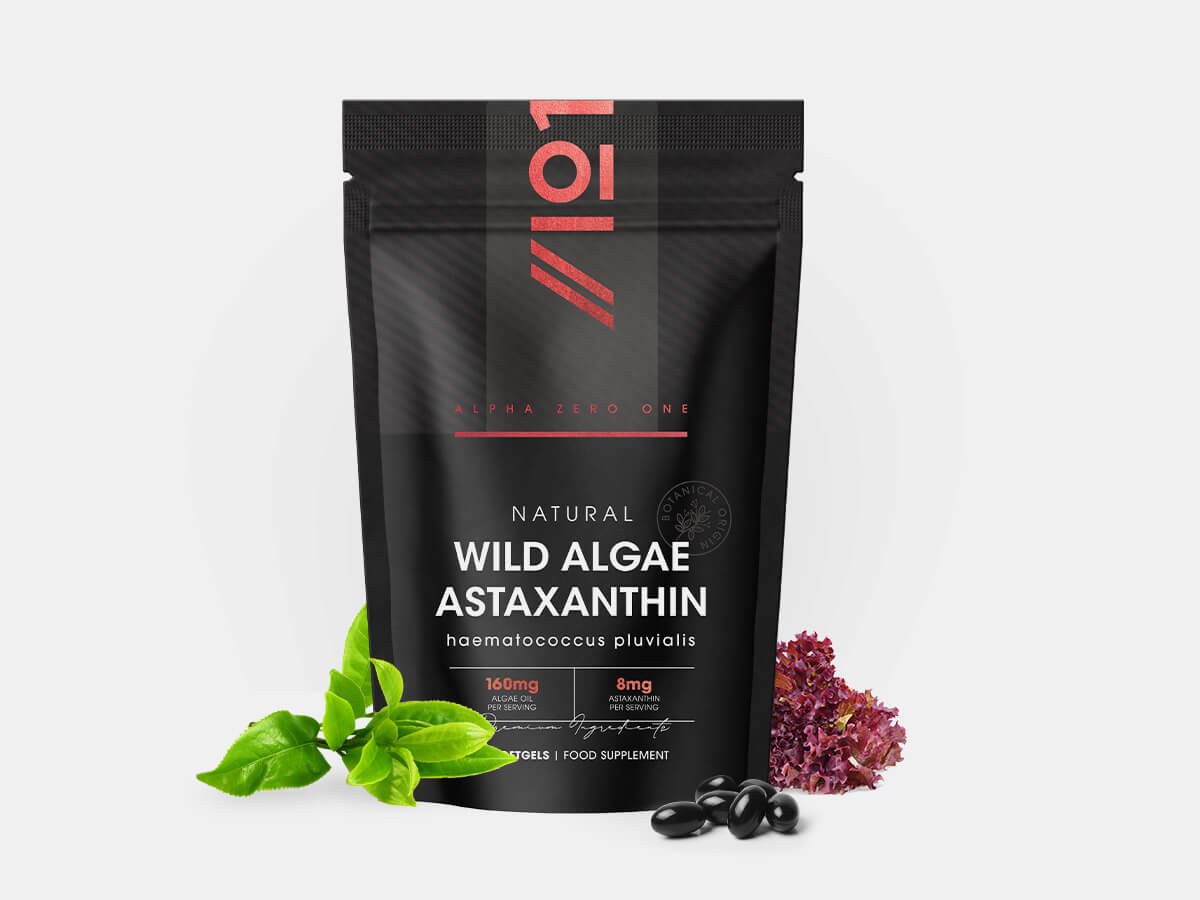
Astaxanthin softgels at a glance
- What it is: a reddish-orange pigment [2] made by the alga Haematococcus pluvialis, in an oil-filled softgel [4].
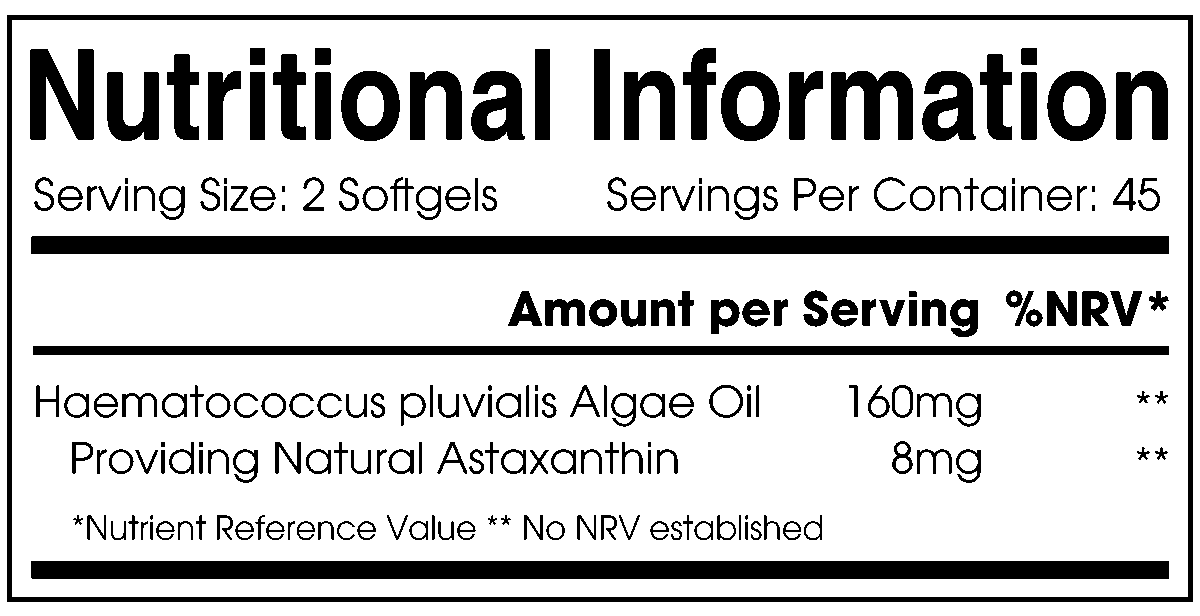
- A daily serving of two softgels gives you 8mg of natural astaxanthin from 160mg of algae oil, so 4mg in each.
- The softgel: a bovine gelatin shell around MCT oil from coconut and the algae oil [4].
- Price: 90 softgels for £9.99, about 22p a day, or 180 for £17.99, about 20p a day.
- Who it suits: adults who want natural astaxanthin from a named alga, with the oil and the astaxanthin both printed on the front of the pouch.
ASTAXANTHIN 8MG · 90 SOFTGELS
£9.99 · 45 servings · 2 softgels daily with water · 160mg of algae oil · 8mg of natural astaxanthin · about 22p a day
SHOP NOW
Which astaxanthin supplement is right for you: 90 or 180 softgels?
One softgel, two pouches. The only difference is how long each lasts and what a day costs: 45 days or three months.
Astaxanthin 8mg, 90 softgels: a 45-day start
Just starting out? Our Astaxanthin 8mg, 90 softgels gives two softgels a day for 45 days, at about 22p a day.
Astaxanthin softgels for three months: the 180 pouch
Ready to stock up? The 180 pouch holds three months of the same softgel and brings the price down to about 20p a day.
ASTAXANTHIN 8MG · 180 SOFTGELS
£17.99 · 90 servings · the same softgel, three months in one pouch · about 20p a day
SHOP NOW
Natural astaxanthin softgels: what the oil and the shell are made of
Like to know what’s inside before you buy? The astaxanthin comes from the alga and sits in MCT oil from coconut, the first ingredient on the list. The shell around it is bovine gelatin with glycerin and purified water [4].
Both pouches sit in our astaxanthin range, among our specialty supplements. Two yellow cousins from the same pigment family have a guide of their own: our lutein and zeaxanthin guide.
Astaxanthin 8mg on the label: what 160mg of algae oil at 5% means
160mg or 8mg? It’s the 8mg that counts: that’s the astaxanthin. The 160mg is the algae oil in two softgels, which carries it.
160mg of algae oil × 5% = 8mg of astaxanthin · 8mg ÷ 2 softgels = 4mg in each · 90 softgels ÷ 2 = 45 days · £9.99 ÷ 45 = about 22p a day · £17.99 ÷ 90 = about 20p a day.
Astaxanthin 8mg, 90 Softgels, nutrition panel and ingredients [4]
The link between them is in the ingredients list: algae oil, 5% astaxanthin. Standardised to 5% means every batch of oil is made to hold that share, so 160mg of oil carries 8mg.
Natural astaxanthin: how the label tells you
Astaxanthin can also be made synthetically, and that form is used in fish feed. A label that names the alga Haematococcus pluvialis, as ours does on the front, the panel and the ingredients list, is declaring that the astaxanthin comes from a natural source. That alga is also why both pouches belong to our algae range.
Astaxanthin 8mg, 90 vs 180 softgels: how they compare
Two pouches, one decision. The table puts them side by side, and prices are correct at the time of writing.
2 softgels · 160mg of Haematococcus pluvialis algae oil standardised to 5% · 8mg of natural astaxanthin, 4mg in each softgel · MCT oil from coconut · bovine gelatin shell
Choose if you want to try it first · 45 days · £9.99: about 22p a day
the same softgel in a larger pouch
Choose if it’s already part of your day · three months · £17.99: about 20p a day
What is astaxanthin? The pigment behind the pink of salmon
Astaxanthin is a fat-soluble carotenoid, a reddish-orange pigment made naturally by microalgae, yeasts and bacteria [2]. It gives fish and shellfish their reddish colour when they feed on the organisms that make it, and Haematococcus pluvialis is the most important source for producing it [2].
How to take astaxanthin softgels
The label says two softgels daily with water, and it names no time of day. Store the pouch in a cool, dry place out of direct sunlight, and keep it out of reach of young children.
The pink of a salmon, in a label you can read
If 8mg a day from a named alga fits what you’re looking for, the 90 pouch is the place to start: 45 days at about 22p a day.
SHOP ASTAXANTHIN SOFTGELS
Astaxanthin supplement FAQs
1. What are the benefits of an astaxanthin supplement?
No health claim for astaxanthin is authorised in the UK [1]. What you get is the natural pigment that gives wild salmon its reddish colour, made by the alga Haematococcus pluvialis [2]. Two softgels give you 8mg of natural astaxanthin from 160mg of Haematococcus pluvialis algae oil standardised to 5%, for about 22p a day [4].
2. How much astaxanthin should I take a day?
Our label says two softgels, which give 8mg: exactly the amount the European Food Safety Authority assessed as safe for adults in supplements [3]. It also says the softgels are not intended for children, or pregnant or breastfeeding women [4].
3. Is astaxanthin 4mg enough, or do I need 8mg?
Each of our softgels holds 4mg, and the label’s serving is two, so a day gives you 8mg. No Nutrient Reference Value exists for astaxanthin, so instead of a percentage, compare the milligrams of astaxanthin in a daily serving.
4. Is your natural astaxanthin from algae?
Yes. The front, the panel and the ingredients list all name Haematococcus pluvialis, a freshwater microalga, as the source [4].
5. Is astaxanthin vegan?
The astaxanthin comes from a microalga and the carrier oil from coconut. The softgel shell is made from bovine gelatin, glycerin and purified water [4].
6. Why is there MCT oil in astaxanthin softgels?
Astaxanthin is fat-soluble, so it’s carried in oil [2]. Ours is medium chain triglyceride oil from coconut, which makes up 60% of the softgel according to the ingredients list [4], and that oil is why both pouches also sit in our oils range.
7. Can I take astaxanthin every day?
Yes, that is how the label sets it: two softgels a day with water. The 90 pouch covers 45 days and the 180 pouch three months.
8. What is Haematococcus pluvialis?
It’s the freshwater microalga that makes the astaxanthin in our softgels, and the most important source for producing it [2].
If you’re new to it, start with the 90 softgels at about 22p a day. If it’s already part of your routine, the 180 pouch brings that down to about 20p. Either way, you now know that the small number on the label is the one that counts.
References
Checked against the product labels and the GB Nutrition and Health Claims Register, September 2026.
[1] Department of Health and Social Care. Great Britain nutrition and health claims (NHC) register, GOV.UK (astaxanthin entries, all non-authorised). Accessed 2026-09-25. View Source
[2] Bjørklund G, Gasmi A, Lenchyk L, et al. (2022). The Role of Astaxanthin as a Nutraceutical in Health and Age-Related Conditions. Molecules, 27(21):7167 (cited for what astaxanthin is and where it comes from). PMC. View Source
[3] EFSA Panel on Nutrition, Novel Foods and Food Allergens. (2020). Safety of astaxanthin for its use as a novel food in food supplements. EFSA Journal, 18(2):5993. PMC. View Source
[4] Alpha01. Astaxanthin 8mg, 90 Softgels and 180 Softgels: nutritional information panels, pouch fronts, ingredients, suggested use, storage, caution and prices. Accessed 2026-09-25. View Source


