In 1890 a Dutch microbiologist, Martinus Beijerinck, described a green cell so small that a pond full of them looks like nothing more than tinted water. He named it Chlorella vulgaris, and the organism has turned out to be anything but ordinary: a single-celled freshwater alga that builds itself from sunlight and carbon dioxide, much as a plant does, yet multiplies at a rate no field crop can match [2]. Each cell also wraps itself in a wall of cellulose so tough that people cannot digest it whole. Producers therefore break that wall mechanically [2], which is why the words broken cell wall appear on the front of our pouch [1].
Today that alga comes as a dark green tablet with just one ingredient and a single line on the label: 2000mg per serving [1]. Four tablets a day give you that 2,000mg of organic chlorella, from about 10p a day. This guide walks you through what the organism is, what that one line means and how our tablets and powder compare, so you know exactly what you are bringing into your daily routine.
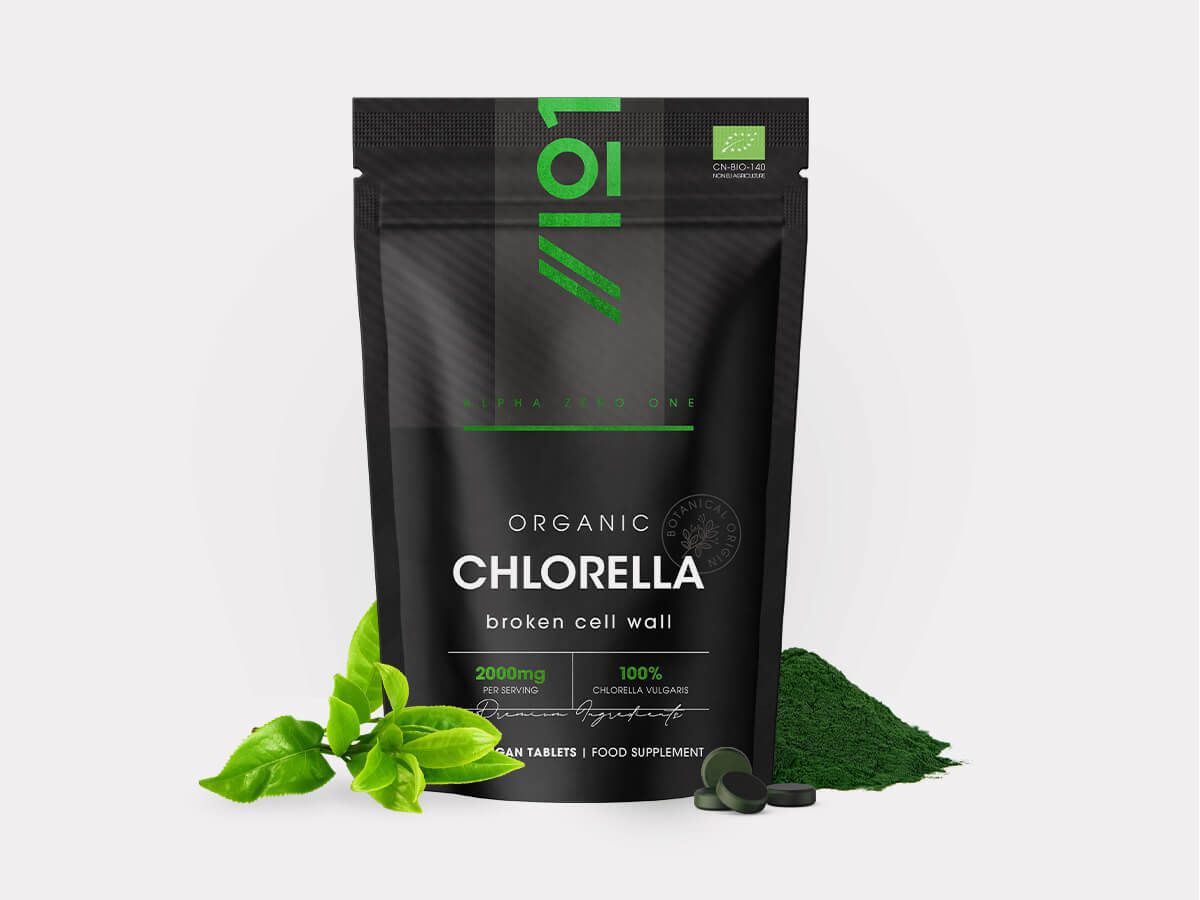
Organic chlorella tablets at a glance
- What it is: certified organic Chlorella vulgaris, a single-celled freshwater green alga, pressed into tablets.
- One ingredient: the ingredients list states only Organic Chlorella Powder (Broken Cell-Wall).
- Four tablets: 2,000mg of chlorella a day, 500mg in each tablet.
- Format: vegan tablets, taken with water, with no powder to mix.
- Price: £8.99 for 300 tablets, 75 servings at about 12p a day, or £24.99 for 1,000 tablets, 250 servings at about 10p a day.
ORGANIC CHLORELLA 2000MG · 300 VEGAN TABLETS
£8.99 · 75 servings · 4 tablets daily with water · 2,000mg of organic broken cell-wall chlorella · one ingredient · about 12p a day
SHOP NOW
What is chlorella? The alga behind the tablet
Chlorella is a green alga made of one cell, and it lives in fresh water [2]. Like a plant it holds chloroplasts and makes its own food from light, but it has no root, stem or leaf, only the cell itself.
Chlorella vulgaris: from a discovery in 1890 to a worldwide crop
The species on our pouch was discovered and reported in 1890 by Martinus Willem Beijerinck, a microbiologist and botanist [2]. A second species followed in 1903 and, since then, more than 20 species and over 100 strains have been described [2].
The remarkable thing about the organism is its pace. Microalgae use sunlight and carbon dioxide more efficiently than land plants, which gives them extremely high growth rates. That efficiency is what allows chlorella to be cultivated at scale and made available worldwide as a food supplement [2].
Broken cell wall: why the chlorella cell is cracked open
Every chlorella cell sits inside a wall of cellulose. People cannot digest the cells in their natural state because of that wall, so in most supplements it is mechanically broken [2]. That is the step our pouch front names: broken cell wall simply tells you how the chlorella in our tablets was processed.
Spirulina and chlorella are not the same organism
The two are often sold side by side, but chlorella is a green alga with a true nucleus, while spirulina is a cyanobacterium. Our spirulina and chlorella guide compares the two labels line by line.
Thinking of adding both to your routine? You can get them in one tablet: our Organic Spirulina and Chlorella tablets give you 1,000mg of each alga in four tablets, 75 servings for £8.99, about 12p a day [1]. If you only want spirulina, our spirulina guide covers the powder and the tablets.
Reading the tablet label: the single line for chlorella 2000mg
The nutrition panel of the tablets holds a single line: organic chlorella, broken cell-wall, 2,000mg per four tablets. Beside it are two asterisks, which stand for no NRV established, because daily reference values exist only for vitamins and minerals.

2,000mg ÷ 4 tablets = 500mg in each tablet · 300 tablets ÷ 4 = 75 servings · £8.99 ÷ 75 = about 12p a day · 1,000 tablets ÷ 4 = 250 servings · £24.99 ÷ 250 = about 10p a day.
Organic Chlorella 2000mg, nutrition panel and prices [1]
Organic chlorella: what the leaf on the pouch covers
The green leaf on the front is the EU organic logo, printed with the control code CN-BIO-140 and the words non-EU agriculture. This logo certifies how the alga was grown and processed, and the ingredients list confirms that nothing else went into the tablet. Both tablet pouches belong to our organic range.
Chlorella tablets or chlorella powder: which is right for you?
The choice is between a fixed amount you swallow and a loose powder you measure yourself. The ingredient is organic chlorella in every case.
Chlorella tablets: a fixed 2,000mg without the taste
If you want the same amount every day and no green drink to mix, choose the 300 tablets. Four tablets with water is the whole routine, and a pouch lasts 75 days at about 12p a day.
Chlorella 2000mg in the large pouch: about 10p a day
If chlorella is already part of your routine, the 1,000 tablets are the same tablets in a pouch of 250 servings. That is about eight months, at about 10p a day.
Chlorella powder: your own amount, by the teaspoon
If you make smoothies, the 500g powder is the lowest price per 100g, at £3.60. Its label carries a per-100g nutrition panel, and our chlorella powder guide reads it figure by figure.
Here are the three labels side by side. Prices are correct at the time of writing.
4 tablets · 2,000mg of organic chlorella, broken cell-wall · one ingredient · vegan tablets · certified organic
Choose if you want a fixed daily amount without the taste, in a pouch to try · 75 days · £8.99: about 12p a day
4 tablets · the same tablets and the same 2,000mg serving · 250 servings
Choose if chlorella is already part of your routine · about eight months · £24.99: about 10p a day
Powder, no serving size stated · 100% organic chlorella powder · a per-100g nutrition panel on the label
Choose if you make smoothies and want to set your own amount · £17.99: £3.60 per 100g, against £5.00 to £5.99 per 100g as tablets
All three pouches sit in our algae range.
How to take chlorella tablets
The label says four tablets daily with water. It names no time of day, so take them when you will remember, all at once or spread through the day.
You’ll notice the tablets have a deep green colour, as they are pressed chlorella with no coating. Store the pouch as the label directs: in a cool, dry place, out of direct sunlight and out of the reach of young children.
One ingredient, one line, a label you can read
To bring that simplicity to your routine, start with a 75-day supply of 300 tablets for about 12p a day.
SHOP ORGANIC CHLORELLA TABLETS
Chlorella tablets FAQs
1. What are the benefits of chlorella tablets?
No health claim is authorised for chlorella on the Great Britain register, so we make none [3]. What we can tell you is what is in the tablet: certified organic Chlorella vulgaris with its cell wall broken, 2,000mg in four tablets, and nothing else.
2. What does broken cell wall chlorella mean?
Each chlorella cell has a wall of cellulose that people cannot digest, so producers break it mechanically during processing [2]. The phrase describes that step and is printed on our pouch front and panel.
3. How many chlorella tablets should I take a day?
The label says four tablets a day with water, which gives you 2,000mg of chlorella; just stick to the amount on the label.
4. Is chlorella powder the same as chlorella tablets?
Both are organic chlorella, but the labels differ. The tablets give a fixed 2,000mg serving and declare chlorella only, while the powder has no set serving and carries a per-100g nutrition panel.
5. What is the difference between spirulina and chlorella?
They are different organisms. Chlorella is a green alga with a true nucleus, and spirulina is a cyanobacterium, which is why the two powders differ in colour and their labels differ in content.
6. Are organic chlorella tablets vegan?
Yes. The pouch front says vegan tablets, and the only ingredient is organic chlorella powder with no coating or capsule shell, so both pouches sit in our vegan range.
7. Can I take chlorella every day?
The label gives a daily amount, so it is made for daily use. If you are pregnant, breastfeeding, have a medical condition or take any medicines, the label asks you to consult a doctor first.
If you want a fixed amount and no taste, take the 300 tablets at about 12p a day, or the 1,000 tablets at about 10p once it is a habit. If you would rather measure your own amount into a smoothie, the 500g powder is the lowest price per 100g. Whichever you choose, you now know what the one line on the label means.
References
Checked against the product labels, the GB Nutrition and Health Claims Register and the published review cited below, September 2026.
[1] Alpha01. Organic Chlorella 2000mg (300 and 1000 tablets) and Organic Chlorella 500g Powder: pouch fronts, nutritional information panels, ingredients, suggested use, caution, storage and prices; Organic Spirulina and Chlorella 2000mg, 300 tablets: nutritional information panel and price. Accessed 2026-09-27. View Source
[2] Bito T, Okumura E, Fujishima M, Watanabe F. Potential of Chlorella as a Dietary Supplement to Promote Human Health. Nutrients. 2020;12(9):2524. View Source
[3] Department of Health and Social Care. Great Britain nutrition and health claims (NHC) register, GOV.UK (no authorised claim for chlorella). Accessed 2026-09-20. View Source


