Chromium is a trace mineral with two authorised health claims in Great Britain. This guide explains what those two claims say, what the NHS says about intake, which of our two chromium products suits you, and what is in an Alpha01 chromium capsule.
The NHS describes chromium as involved in influencing how the hormone insulin behaves in the body [2]. The register’s two authorised claims follow from that role: chromium contributes to normal macronutrient metabolism, and chromium contributes to the maintenance of normal blood glucose levels [1].
Every health claim on the Great Britain register passed a scientific review: independent scientists examined the research and the evidence behind it before it was authorised. The law itself says that health claims shall be “based on and substantiated by generally accepted scientific evidence” (Regulation (EC) No 1924/2006, Article 6).
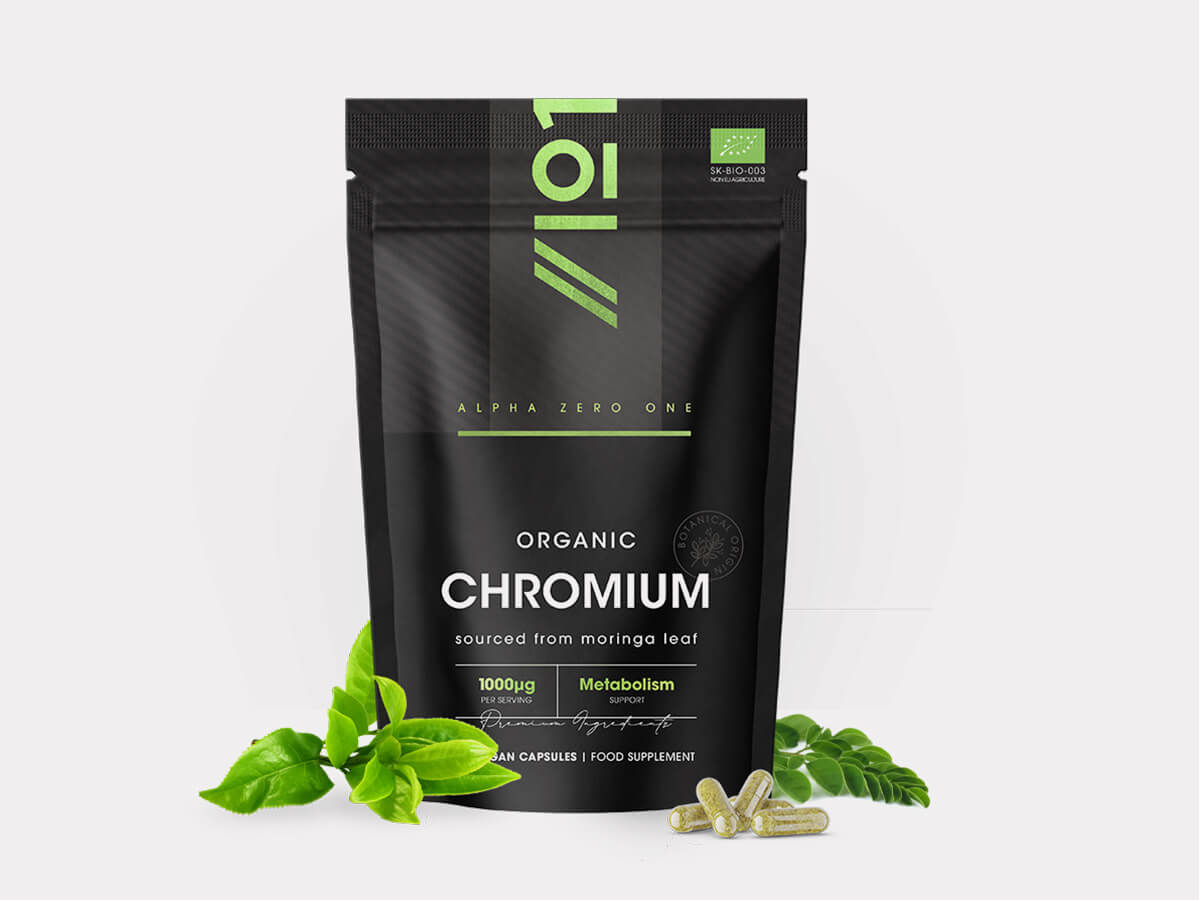
ORGANIC CHROMIUM 1000MCG FROM MORINGA LEAF – 60 CAPSULES
£9.99 · 30 servings · 1,000mcg organic chromium per 2 capsules
SHOP NOW
What Chromium Is: A Trace Mineral Involved in How Insulin Behaves
Chromium is a trace mineral, needed in micrograms rather than milligrams. Insulin, the hormone chromium is involved with, is what lets cells take up glucose from the blood. That is the biology behind the register’s wording on macronutrient metabolism and normal blood glucose levels.
The Great Britain Nutrition and Health Claims (NHC) Register authorises the claim that “Chromium contributes to the maintenance of normal blood glucose levels”[1], alongside a second claim, “Chromium contributes to normal macronutrient metabolism”. Both may be used only for foods and supplements that are at least a source of trivalent chromium. Explore our minerals collection for the full range.
What the Register Says: Chromium’s Two Authorised Claims
The register gives chromium two authorised roles: it contributes to normal macronutrient metabolism, and it contributes to the maintenance of normal blood glucose levels [1]. Both describe a normal function of the body.
Authorised Health Benefits of Chromium
The register’s conditions of use: the claims may be used only for food which is at least a source of trivalent chromium (15% of the 40µg nutrient reference value per daily portion) [1]. At 1,000µg per serving, our chromium products are well above that threshold.
Chromium: Chromium contributes to normal macronutrient metabolism. Chromium contributes to the maintenance of normal blood glucose levels.
Which Chromium Is Right for You?
If you’re comparing chromium supplements, the two figures to compare are the micrograms of trivalent chromium per serving and the daily dose. Both of ours provide 1,000µg per serving, 2,500% of the 40µg nutrient reference value. Both carry the same two register claims, so choose one of them as your daily chromium.
If you want it organic and plant-sourced, our Organic Chromium 1000mcg from Moringa Leaf is certified organic, extracted from Moringa oleifera leaf, in a hypromellose capsule with organic brown rice flour: 60 vegan capsules, two per serving, 30 servings for £9.99.
If you want the longest supply for the price, our Chromium Picolinate 1000mcg is one vegan tablet a day with BioPerine black pepper extract: 180 tablets for £6.99, a six-month supply at about 4p a day.
If you read labels, three lines tell you what you are buying: the form of chromium (moringa leaf extract or chromium picolinate, both trivalent chromium), the micrograms per serving with its % NRV, and the serving size, which is two capsules for the organic product and one tablet for the picolinate.
Choosing a Chromium Supplement: Organic Moringa or Picolinate
Our Organic Chromium 1000mcg from Moringa Leaf (60 vegan capsules) provides organic chromium extracted from Moringa oleifera leaf, with organic brown rice flour in a hypromellose capsule; the label gives the amount per capsule and the daily serving. Our Chromium Picolinate 1000mcg (180 vegan tablets) provides chromium as chromium picolinate with BioPerine black pepper extract, one tablet a day. Both carry the same two register claims.
READY TO ADD CHROMIUM TO YOUR DAILY ROUTINE?
Our Organic Chromium from Moringa Leaf provides chromium, which contributes to normal macronutrient metabolism and to the maintenance of normal blood glucose levels.
SHOP ORGANIC CHROMIUM
Chromium FAQs
1. What does ‘maintenance of normal blood glucose levels’ actually mean?
It is the register’s authorised wording for one of chromium’s roles, alongside “contributes to normal macronutrient metabolism” [1]. It describes chromium’s part in a normal function of a healthy body.
2. How much chromium should I take daily?
One tablet of our Chromium Picolinate or two capsules of our Organic Chromium a day, as the labels say: either serving gives you 1,000µg of chromium, 2,500% of the 40µg nutrient reference value. The NHS says around 25 micrograms of chromium a day should be enough for adults, and that 10mg or less a day from food and supplements is unlikely to cause any harm[2]. Always follow the dose on the label and, as the labels ask, have a word with your doctor first if you have a medical condition or take any medication.
3. Is chromium from moringa leaf different from chromium picolinate?
They are two forms of the same trace mineral. Our Organic Chromium is extracted from Moringa oleifera leaf and certified organic; our Chromium Picolinate is chromium bound to picolinic acid. The register makes no distinction between them: both are trivalent chromium and both carry the same two authorised claims. Which you choose is a matter of preference (plant-derived and organic, or a picolinate tablet with a six-month supply).
Chromium is a trace mineral with two authorised claims: it contributes to normal macronutrient metabolism and to the maintenance of normal blood glucose levels. For your daily chromium, choose our Organic Chromium 1000mcg from Moringa Leaf, certified organic in two vegan capsules, or our Chromium Picolinate 1000mcg, one tablet a day for about 4p.
References
[1] Great Britain Nutrition and Health Claims (NHC) register. (2024). View Register
[2] NHS. Vitamins and minerals: others (chromium). View Source


