THE ALPHA01 GUIDE MINERALS
Electrolyte
Tablets: What Is Inside, and What a Label Can Say
Five minerals. One swallowed tablet.
A clearer look at the amounts and authorised claims.

Do you finish a long run, a hot shift or an afternoon in the garden, reach for your water and wonder about the minerals as well? Those minerals are what the word electrolytes means, and UK law authorises specific statements about them: magnesium contributes to electrolyte balance and to a reduction of tiredness and fatigue, while potassium and calcium contribute to normal muscle function 1. Our tablet provides all three, alongside chloride and sodium 2.
Some electrolyte tablets are effervescent and fizz as they dissolve in your water bottle, but ours is simply swallowed whole. If you’re wondering about the 980mg in the name, that’s the five minerals of one tablet added together, not any single one 2. This guide takes you through each mineral on our panel, the authorised claims it carries and which of our mineral supplements fits your day.
Electrolyte tablets at a glance
- Who it suits: adults who want potassium, chloride, calcium, magnesium and sodium together in one tablet a day.
- What UK law authorises: magnesium contributes to electrolyte balance, and potassium contributes to normal muscle function 1.
- One tablet: potassium 300mg, chloride 380mg, calcium 125mg, magnesium 75mg and sodium 100mg, which together make the 980mg in the name 2.
- How you take it: one tablet a day, swallowed with water.
- What is not in it: the ingredients list has no sugar, sweetener, colour or flavouring.
- Price: £9.99 for 180 tablets, about six months at about 6p a day.
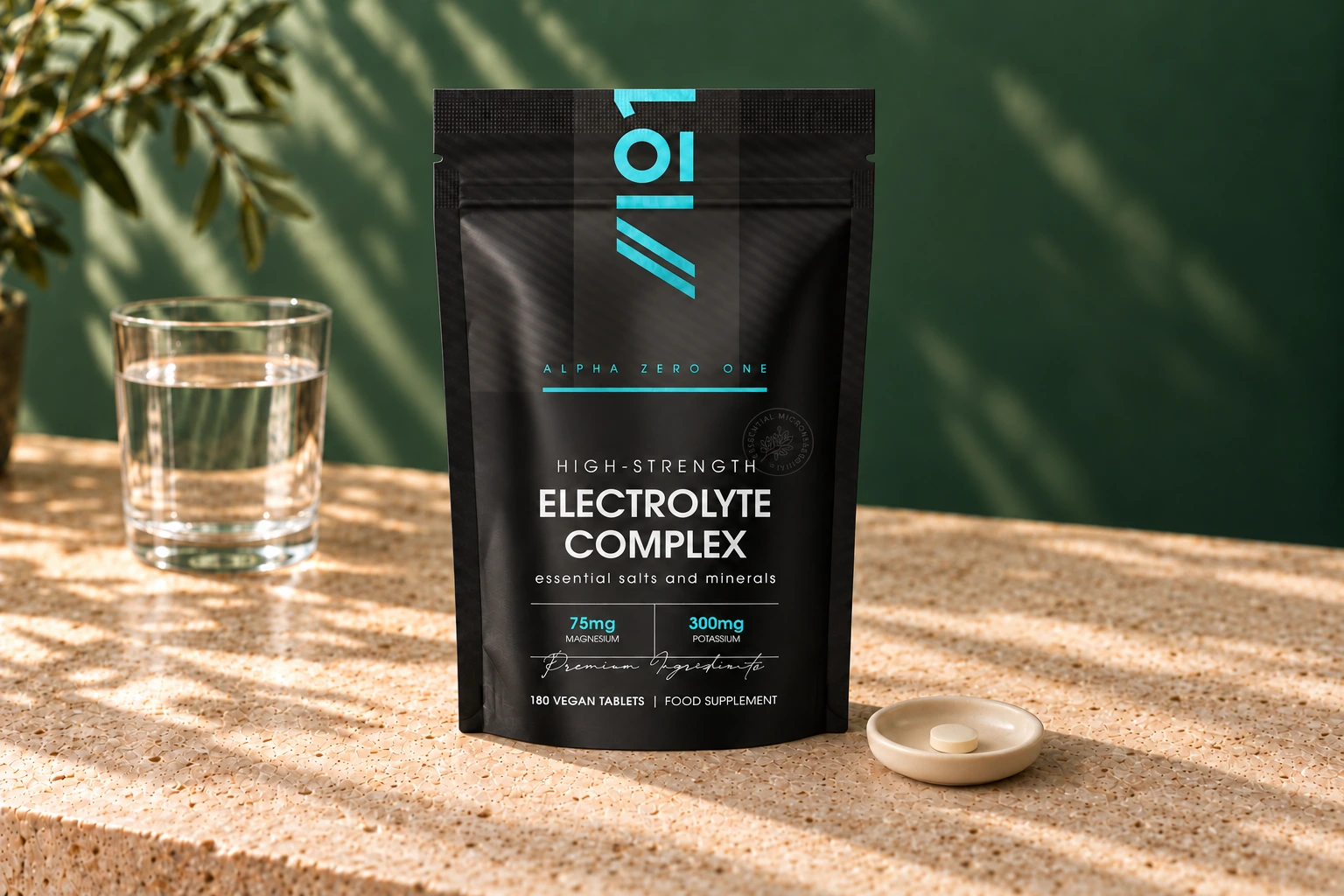
FIVE MINERALS · ONE DAILY TABLET
Electrolyte Tablets 980mg
£9.99 · 180 servings · 1 tablet daily with water · potassium 300mg, chloride 380mg, calcium 125mg, magnesium 75mg, sodium 100mg · about 6p a day
01 / UNDERSTAND THE CLAIMS
Electrolyte supplement benefits: the claims UK rules authorise
Electrolytes are minerals that carry an electric charge when dissolved in the body’s fluids: sodium, potassium, chloride, calcium and magnesium. In the UK a food supplement may carry only the health claims authorised on the Great Britain Nutrition and Health Claims Register 1, and the law requires each of them to be “based on and substantiated by generally accepted scientific evidence” 3.
The register lets a mineral carry these sentences only when one daily serving gives at least 15% of its daily reference. Four of the five minerals in our tablet reach that with one tablet a day, so all twenty-two sentences below apply. We’ve listed them word for word, mineral by mineral, starting with the ten for magnesium.
Magnesium
Per daily tablet- Magnesium contributes to electrolyte balance.
- EnergyMagnesium contributes to a reduction of tiredness and fatigue.Magnesium contributes to normal energy-yielding metabolism.
- Magnesium contributes to normal muscle function.
- Magnesium contributes to normal functioning of the nervous system.Magnesium contributes to normal psychological function.
- Magnesium contributes to normal protein synthesis.
- Magnesium contributes to the maintenance of normal bones.
- Magnesium contributes to the maintenance of normal teeth.
- Magnesium has a role in the process of cell division.
Potassium
Per daily tabletThree are for potassium.
Calcium
Per daily tabletEight are for calcium.
- Calcium contributes to normal muscle function.
- EnergyCalcium contributes to normal energy-yielding metabolism.
- Calcium contributes to normal blood clotting.
- Calcium contributes to normal neurotransmission.
- Calcium contributes to the normal function of digestive enzymes.
- Calcium has a role in the process of cell division and specialisation.
- Calcium is needed for the maintenance of normal bones.
- Calcium is needed for the maintenance of normal teeth.
Chloride
Per daily tabletOne is for chloride.
02 / READ THE LABEL
Electrolyte tablets 980mg: what the number in the name means
The 980mg in the product name is not the amount of a single mineral but the combined weight of all five in one tablet. The nutrition panel lists each one with its share of the daily reference.
Nutritional Information
Serving Size: 1 Tablet
Servings Per Container: 180
| Mineral | Each Serving Contains | %NRV* |
|---|---|---|
| Potassium | 300mg | 15% |
| Chloride | 380mg | 48% |
| Calcium | 125mg | 16% |
| Magnesium | 75mg | 20% |
| Sodium | 100mg | ** |
*Nutrient Reference Value
** No NRV established
- Potassium
- 300mg
- Chloride
- 380mg
- Calcium
- 125mg
- Magnesium
- 75mg
- Sodium
- 100mg
per pouch
Electrolyte Tablets 980mg, nutrition panel 2
Each line of the panel gives a mineral’s amount and its share of the daily reference, from 15% for potassium to 48% for chloride. Sodium has no daily reference, which is why the panel prints two asterisks beside it.
Where the minerals come from: the electrolyte complex ingredients
The ingredients list names the sources: potassium chloride, magnesium bisglycinate, calcium carbonate and sodium chloride, which is table salt. The rest holds the tablet together and coats it: two stabilisers, microcrystalline cellulose, a hypromellose glaze and magnesium stearate.
03 / DAILY AMOUNTS
How much potassium, magnesium and calcium do you need? What the NHS says
The NHS gives a daily figure for each of them: “Adults (19 to 64 years) need 3,500mg of potassium a day.” 4 For magnesium it is 300mg a day for men and 270mg for women aged 19 to 64 4. For calcium it is 700mg a day for adults 5.
One tablet adds 300mg of potassium, 125mg of calcium and 75mg of magnesium to your day, with 380mg of chloride and 100mg of sodium alongside 2.
04 / FIND YOUR FORMAT
Which electrolyte supplement is right for you?
You can take these minerals in three ways: all five together in an electrolyte supplement, one on its own in a larger amount, or as part of a combination you may already take, such as a multivitamin. What differs is the amount of each, the serving and the price.
FIVE MINERALS TOGETHER
Electrolyte tablets: five minerals in one tablet a day
If you’d prefer your minerals combined, our Electrolyte Tablets 980mg give you potassium, chloride, calcium, magnesium and sodium in one swallowed tablet, and you’ll find them in both our minerals range and our sport and fitness collection.
POTASSIUM WITH VITAMIN C
Potassium supplement on its own: potassium citrate with vitamin C
If potassium is the one mineral you are after, our electrolyte capsules for it are Potassium Citrate 1500mg with Vitamin C: two capsules give you 500mg of potassium, 25% of the daily reference, plus 80mg of vitamin C. It costs about 11p a day, and you can read a full breakdown of its label in our potassium guide.
Want one mineral on its own, or already take a multivitamin?
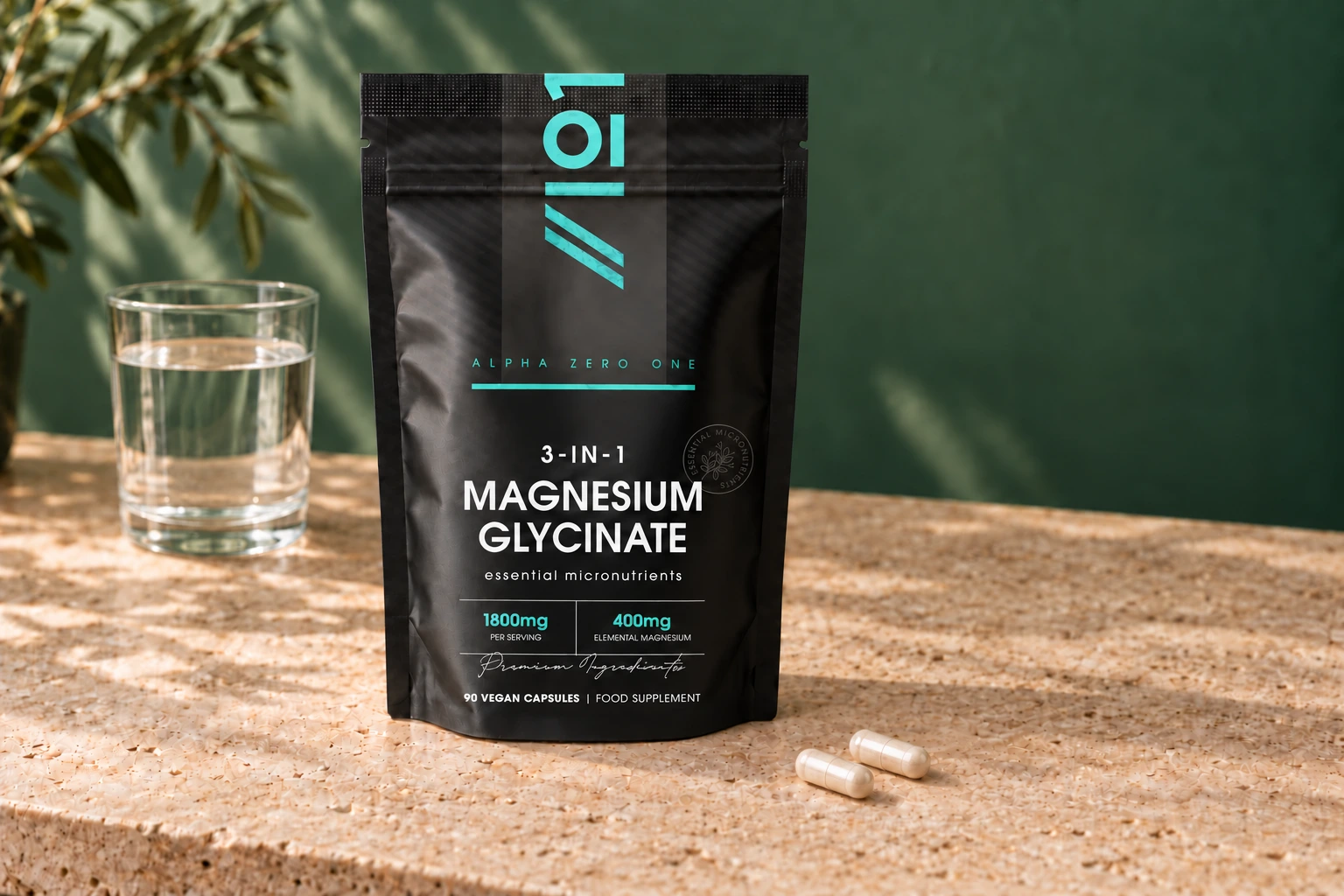
For more magnesium than the tablet’s 75mg, our Magnesium Glycinate 3-IN-1 gives 400mg in two capsules, our Chelated Magnesium 400mg is three capsules a day and our Dead Sea Magnesium Citrate 440mg two, all in our magnesium range 2. For calcium, our Calcium Tablets 400mg are one a day, our Calcium Magnesium Zinc gives 450mg with magnesium and zinc in one tablet and our Calcium & Vitamin D3 gummies 500mg in two, all in our calcium range 2.
If you already take our Women’s Multivitamins or MultiVitamin & Minerals, each label lists its own magnesium and calcium, so you can see what one electrolyte tablet adds; our magnesium guide, our calcium guide and our multivitamin guide go further.
Here are the electrolyte tablets, the potassium capsules and the 3-IN-1 magnesium side by side. Prices are correct at the time of writing.
| Product | What the label declares | Routine / pack / value |
|---|---|---|
1 tablet · potassium 300mg (15% NRV), chloride 380mg (48%), calcium 125mg (16%), magnesium 75mg (20%), sodium 100mg · vegan tablet, swallowed with water | Choose if you want the five minerals together in one tablet a day · 180 days · £9.99: about 6p a day | |
2 capsules · potassium citrate 1,500mg, providing potassium 500mg (25% NRV) · vitamin C 80mg (100%) · hypromellose capsule | Choose if you’re looking for potassium, plus vitamin C · 90 days · £9.99: about 11p a day | |
2 capsules · bisglycinate, malate and citrate · 400mg of magnesium, 107% NRV · vegan capsule | Choose if you want magnesium on its own, 400mg in two capsules · 45 days · £5.99: about 13p a day |

POTASSIUM WITH VITAMIN C
Potassium Citrate 1500mg with Vitamin C
£9.99 · 90 servings · 2 capsules daily with water · potassium 500mg, 25% NRV · vitamin C 80mg, 100% NRV · about 11p a day
05 / KEEP IT SIMPLE
How to take electrolyte tablets: swallow, don’t dissolve
The label says one tablet daily with water. The tablet is coated and made to be swallowed whole rather than dissolved, so it won’t fizz or flavour your water.
An electrolyte powder is stirred into water to make an electrolyte drink, usually flavoured, and hydration or rehydration tablets that fizz dissolve into the bottle the same way. Ours are not electrolyte tablets for water: you swallow one, with the five minerals and nothing to taste. The label names no time of day, so build it into your daily routine: with breakfast, say, or when you fill your water bottle for the day.
A SIMPLE DAILY ROUTINE
Five minerals, one tablet, a label you can read
If one swallowed tablet a day suits your routine, a pouch of 180 covers about six months at about 6p a day.
SHOP ELECTROLYTE TABLETS06 / A LITTLE MORE CLARITY
Electrolyte tablets FAQs
What are electrolytes?
They are minerals that carry an electric charge when dissolved in the body’s fluids: sodium, potassium, chloride, calcium and magnesium. Our tablet declares all five, each with its amount on the nutrition panel.
Do you dissolve electrolyte tablets in water?
Not ours. It is a coated tablet that you swallow with water, once a day. Effervescent electrolyte tablets made to dissolve in a bottle are a different kind of product, and they often carry sweeteners and flavourings that ours doesn’t.
Can I take electrolyte tablets every day?
Yes, the label directs one tablet daily with water, so it is made for daily use, and a pouch of 180 is 180 days of it 2.
Who should not take electrolyte tablets?
Is an electrolyte tablet just salt?
No, but salt is part of it: one tablet declares 100mg of sodium, which equals 0.25g of salt. The NHS limit for adults is 6g of salt a day, so a tablet is about 4% of it 4.
What are the benefits of an electrolyte supplement?
The benefits UK law authorises belong to the minerals inside: magnesium contributes to a reduction of tiredness and fatigue, potassium contributes to the maintenance of normal blood pressure, and magnesium, potassium and calcium contribute to normal muscle function 1. You’ll find them among the twenty-two sentences quoted word for word above.
Are your electrolyte tablets vegan?
Yes. The pouch is marked vegan tablets, the glaze is plant-derived hypromellose, and you’ll find them in our vegan range too.
Do electrolyte tablets contain caffeine or sugar?
Neither. The ingredients list names the four mineral sources, two stabilisers, a bulking agent, the hypromellose glaze and magnesium stearate, with no caffeine, sugar, sweetener, colour or flavouring 2.
Do electrolyte tablets expire?
Yes. The pouch prints a date, so use the tablets before it, and keep the pouch in a cool, dry place out of direct sunlight, as the label asks 2.
THE BOTTOM LINE
So, which electrolyte supplement?
If you want the five minerals together, take the Electrolyte Tablets 980mg at about 6p a day. If potassium alone is what you were looking for, choose the Potassium Citrate with Vitamin C at about 11p. Whichever you pick, the label tells you exactly what one serving gives you, and that is the number to go by.
GO TO THE SOURCE
Sources & references
Checked against the product labels, the GB Nutrition and Health Claims Register and nhs.uk, October 2026.
- Department of Health and Social Care. Great Britain nutrition and health claims (NHC) register, GOV.UK (magnesium, potassium, calcium and chloride entries authorised; no hydration claim for electrolyte tablets). Accessed 2026-09-28. View source
- Alpha01. Electrolyte Tablets 980mg (180 tablets), Potassium Citrate 1500mg with Vitamin C (180 capsules), Magnesium Glycinate 3-IN-1 1800mg (90 capsules), Chelated Magnesium 400mg (90 capsules), Dead Sea Magnesium Citrate 440mg (90 capsules), Calcium Tablets 400mg (180 tablets), Calcium & Vitamin D3 (60 gummies), Calcium Magnesium Zinc 450mg (90 tablets), Women’s Multivitamins (90 tablets) and MultiVitamin & Minerals (90 tablets): pouch fronts, nutritional information panels, ingredients, suggested use, caution and prices. Accessed 2026-09-28. View source
- Regulation (EC) No 1924/2006 on nutrition and health claims made on foods, Article 6: scientific substantiation for claims, as it applies in Great Britain. legislation.gov.uk. Accessed 2026-09-25. View source
- Vitamins and minerals: others (potassium, magnesium, sodium chloride), NHS. Accessed 2026-09-20. View source
- Vitamins and minerals: calcium, NHS. Accessed 2026-09-20. View source