Do you skip fish, by choice or simply by taste, and wonder where your omega-3 is supposed to come from? The NHS has a short answer, and flaxseed oil is the first name on its list of plant sources [2]. The omega-3 in it is called ALA, and UK law authorises one statement about it: ALA contributes to the maintenance of normal blood cholesterol levels. The beneficial effect is obtained with a daily intake of 2g of ALA [1]. The plant behind the oil has been useful for a very long time, from the linen of ancient Egypt to the linseed oil in a painter’s studio [3].
But settling on flaxseed oil is only half the battle, and the confusion begins when you try to decide which one is right for you. Our pouch prints 2000mg and 3-6-9 on the front, and when you turn it over, the panel shows how much of that is omega-3: 1,017mg of ALA in two softgels [4]. This guide shows you what each number on the pouch means, how ALA differs from the omega-3 in fish, and which of our two flaxseed oils fits your day.
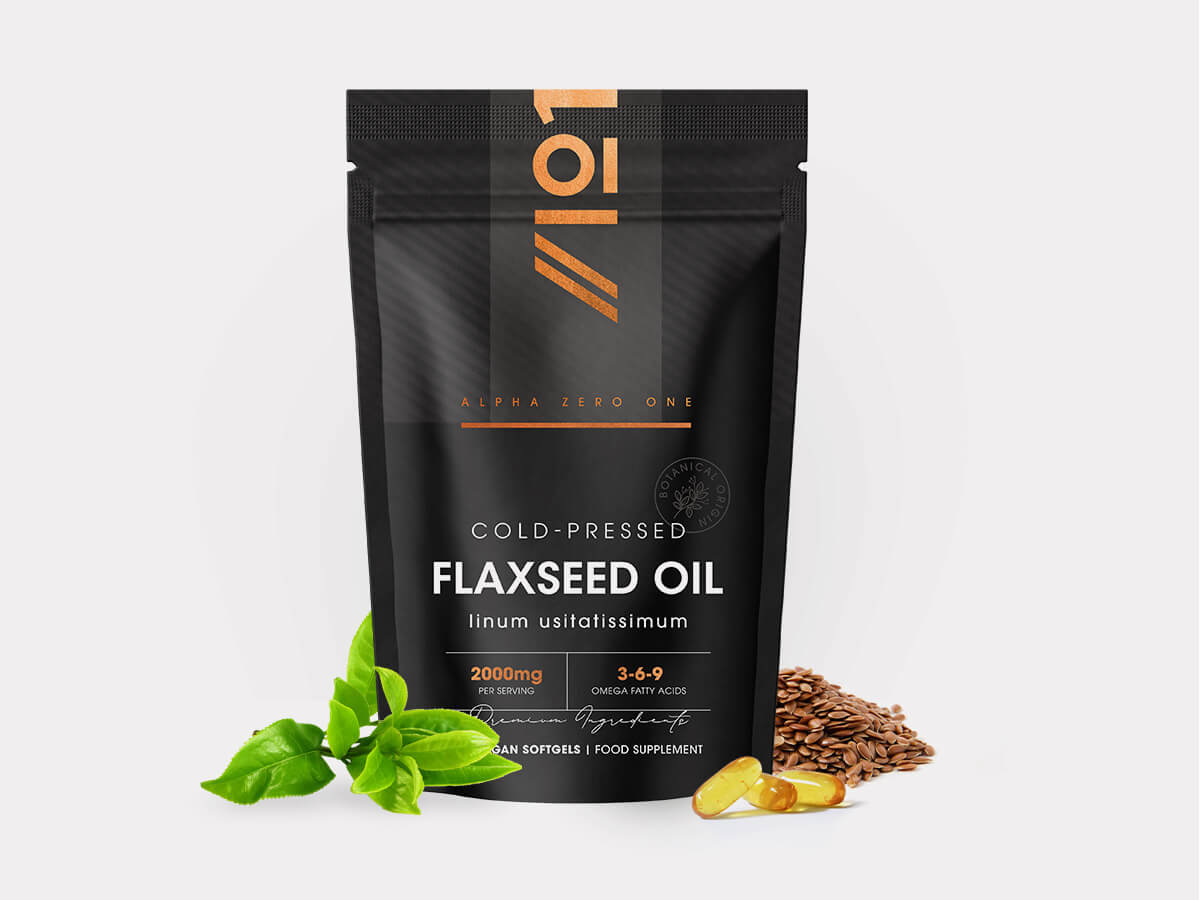
Flaxseed oil capsules at a glance
- Who it suits: vegetarians, vegans and anyone who does not eat fish and wants a plant omega-3.
- What is authorised: ALA contributes to the maintenance of normal blood cholesterol levels. The beneficial effect is obtained with a daily intake of 2g of ALA [1].
- Two softgels: cold-pressed flaxseed oil 2,000mg, giving ALA 1,017mg, linoleic acid 188mg and oleic acid 188mg.
- The 3-6-9 on the front: mostly omega-3 with small amounts of omega-6 and omega-9.
- Format: a plant-based softgel, marked vegan on the pouch front.
- Price: £11.99 for 180 softgels, three months at about 13p a day.
FLAXSEED OIL 2000MG · 180 VEGAN SOFTGELS
£11.99 · 90 servings · 2 softgels daily with water · cold-pressed flaxseed oil 2,000mg · ALA 1,017mg · about 13p a day
SHOP NOW
Flaxseed oil softgels or organic flaxseed oil: which is right for you?
Both hold flaxseed oil and nothing else inside a plant-based shell. They differ in the amount of ALA, in organic certification and in the price a day.
Flaxseed oil softgels: the most ALA for the least money
If the amount of omega-3 matters most, our Flaxseed Oil 2000mg softgels give 1,017mg of ALA in two softgels. The 180 pouch lasts three months at about 13p a day, and the 90 pouch costs about 18p.
Organic flaxseed oil: extra virgin, in a two-ingredient capsule
If certified organic oil matters more, our Organic Flaxseed Oil LiCaps give 660mg of ALA from organic extra virgin oil in a hypromellose shell, and they belong to our organic range. The 60 pouch costs about 27p a day and the 120 pouch about 25p, which works out at about 40p and 38p per gram of ALA, compared to about 13p for the softgels.
ORGANIC FLAXSEED OIL 1440MG · 60 VEGAN LICAPS
£7.99 · 30 servings · 2 capsules daily with water · organic extra virgin flax seed oil 1,440mg · ALA 660mg · about 27p a day
SHOP NOW
Here are the labels side by side. Prices are correct at the time of writing.
2 softgels · cold-pressed flaxseed oil 2,000mg · ALA 1,017mg, linoleic acid 188mg, oleic acid 188mg · plant-based softgel shell
Choose if you want the most ALA per serving and the lowest price a day · 90 days · £11.99: about 13p a day · 90 softgels about 18p a day
2 capsules · organic extra virgin flax seed oil 1,440mg · ALA 660mg, linoleic acid 155mg, oleic acid 135mg · hypromellose shell · two ingredients
Choose if certified organic oil and a two-item ingredients list matter more than the amount · 30 days · £7.99: about 27p a day · 120 LiCaps about 25p a day
You’ll find all four of our flaxseed pouches in our flaxseed oil range. If you’re looking for other seed oils, head over to our wider oils and herbal supplements ranges.
Flaxseed oil and fish oil together: the omega 3-6-9 blend
Do you eat fish as well? Our Omega 3-6-9 Fish Oil 3600mg blends wild-caught fish oil with flaxseed and borage oils in a bovine gelatin softgel.
A daily serving of three softgels gives you 600mg of ALA, 216mg of EPA and 144mg of DHA, for about 37p a day [4]. You can read the rest of its label in our omega 3-6-9 guide, and our omega 3 fish oil guide covers EPA and DHA on their own.
Plant omega 3: what the NHS says about flaxseed oil and fish
The NHS explains why these fats matter at all: “Some types of omega-3 and omega-6 fats cannot be made by your body, which means it’s essential to include small amounts of them in your diet.” [2] For those who do not eat fish, it names the plant sources.
“Sources of omega-3 fatty acids suitable for vegetarians include flaxseed (linseed) oil, rapeseed oil, walnuts and egg enriched with omega-3.”
Fat: the facts, nhs.uk [2]
How does the omega 3 in flaxseed oil differ from fish oil?
The omega-3 in flaxseed oil is ALA, and the omega-3s in oily fish are EPA and DHA, which are longer molecules. They are not interchangeable on a label, and the claims the law authorises for them are different.
Omega 6 and omega 9 in flaxseed oil: what 3-6-9 means
Our softgels declare 188mg each of linoleic acid and oleic acid, so the 3-6-9 on the front is accurate, and more than two thirds of it is the 3.
Flaxseed oil 2000mg on the label: oil, ALA and the 3-6-9
The 2000mg on the front is the weight of oil in two softgels. The panel then breaks out three fatty acids, and the first is the one you are probably buying it for.

2,000mg of oil · ALA 1,017mg, about half of it · linoleic acid 188mg · oleic acid 188mg · £11.99 ÷ 90 = about 13p a day.
Flaxseed Oil 2000mg, nutrition panel and price [4]
Around half of the oil is ALA, which is what sets flaxseed apart from most plant oils. So when you check our panels, you’ll see the ALA for your daily serving listed under the oil: 1,017mg in two softgels and 660mg in two organic LiCaps.
Linseed oil and flaxseed oil: one plant, two names
Flax and linseed are the same plant, Linum usitatissimum, a name that means the most useful. It was first cultivated near the Middle East, its stem fibres became the linen of ancient Egypt, and its pressed seed gave painters their linseed oil [3]. Cold-pressed, the word on our pouch front, means the oil was pressed without added heat.
Flaxseed oil benefits: the claim UK rules authorise
A food supplement may carry only the health claims authorised on the Great Britain Nutrition and Health Claims Register, and for ALA there is one, which must be given with its information sentence [1].
Every health claim on the Great Britain register passed a scientific review: independent scientists examined the research and the evidence behind it before it was authorised [1]. The law itself says that health claims shall be “based on and substantiated by generally accepted scientific evidence” [5].
Alpha-linolenic acid: the authorised claim, word for word
- ALA contributes to the maintenance of normal blood cholesterol levels.
- The beneficial effect is obtained with a daily intake of 2g of ALA.
Two softgels give 1,017mg of ALA towards that daily 2g, which counts all the ALA you eat in a day, walnuts and rapeseed oil included [4].
How to take flaxseed oil softgels
The label says two softgels daily with water, and it names no time of day. Take them when you will remember, and store the pouch in a cool, dry place out of direct sunlight.
A clear choice for your plant omega 3
If fish is not on your plate, two softgels a day give 1,017mg of ALA for about 13p.
SHOP FLAXSEED OIL SOFTGELS
Flaxseed oil FAQs
1. What are the benefits of flaxseed oil capsules?
UK law authorises this claim for the ALA they declare: ALA contributes to the maintenance of normal blood cholesterol levels, and the beneficial effect is obtained with a daily intake of 2g of ALA [1]. Two softgels give 1,017mg of ALA [4].
2. Is flaxseed oil a vegan omega 3?
Yes. The oil is pressed from a seed, the pouch front says vegan softgels, and the organic LiCaps use a hypromellose shell. All four pouches sit in our vegan range, and the NHS lists flaxseed oil among the omega-3 sources suitable for vegetarians [2].
3. Is flaxseed oil as good as fish oil?
They are different. Flaxseed oil gives ALA, and fish oil gives EPA and DHA, which carry their own, separate authorised claims. Our omega 3 fish oil guide covers those.
4. How much omega 3 is in flaxseed oil softgels?
Two softgels declare 1,017mg of alpha-linolenic acid, about half of the 2,000mg of oil. Our organic LiCaps declare 660mg in two capsules.
5. Is linseed oil the same as flaxseed oil?
Yes. Flax and linseed are two names for one plant, Linum usitatissimum [3]. Only oil sold as a food or a supplement is for eating, not the linseed oil from a hardware shop.
6. What does 3-6-9 mean on flaxseed oil?
It refers to the three fatty acids on the panel. ALA is the omega-3 at 1,017mg, linoleic acid is the omega-6 at 188mg and oleic acid is the omega-9 at 188mg.
7. Can I take flaxseed oil every day?
Yes, the label directs you to take two softgels daily, and you should not exceed this [4].
8. Can I take flaxseed oil when pregnant or on blood-thinning medicines?
The softgel label says: “This product is not intended for children, or pregnant or breastfeeding women. If you have a medical condition or are taking any medications, please consult with a doctor before use.” [4] The US National Center for Complementary and Integrative Health notes that flaxseed oil might interact with anticoagulant or antiplatelet medicines [3].
If you want the most ALA for the least money, take the Flaxseed Oil 2000mg softgels at about 13p a day. If certified organic, extra virgin oil matters more to you, choose the Organic Flaxseed Oil LiCaps at about 27p, or about 25p in the 120 pouch. Whichever you pick, it’s just two capsules a day with water, and the ALA on the panel counts towards the 2g a day in the claim.
References
Checked against the product labels, the GB Nutrition and Health Claims Register, nhs.uk and the NCCIH page cited below, September 2026.
[1] Department of Health and Social Care. Great Britain nutrition and health claims (NHC) register, GOV.UK (ALA entry with its condition of use and information sentence). Accessed 2026-09-20. View Source
[2] Fat: the facts – NHS. Accessed 2026-09-20. View Source
[3] National Center for Complementary and Integrative Health. Flaxseed and Flaxseed Oil. Accessed 2026-09-20. View Source
[4] Alpha01. Flaxseed Oil 2000mg (180 and 90 softgels), Organic Flaxseed Oil 1440mg (60 and 120 LiCaps) and Omega 3-6-9 Fish Oil 3600mg (120 softgels): pouch fronts, nutritional information panels, ingredients, suggested use, caution and prices. Accessed 2026-09-28. View Source
[5] Regulation (EC) No 1924/2006 on nutrition and health claims made on foods, Article 6: scientific substantiation for claims, as it applies in Great Britain. legislation.gov.uk. Accessed 2026-09-25. View Source


