If you eat little or no meat, you may have read that grains are short of one building block your body cannot make for itself. It is called lysine, and it is one of the nine essential amino acids among the twenty that build every protein you have [2]. Meat, fish, eggs, dairy foods and pulses carry it, but cereals hold so little that lysine has been added to grain-based diets around the world for decades [2]. The lysine in a modern capsule has a quietly remarkable origin of its own: it is brewed, not extracted, by a bacterium called Corynebacterium glutamicum working in a fermentation tank [3].
The word fermented on our pouch refers to this process, and each three-capsule serving gives you 1,500mg of lysine with 150mg of vitamin C [1]. Vitamin C contributes to the reduction of tiredness and fatigue and to the normal function of the immune system [4]. This guide explains what lysine is, where it is found, how to read the panel and whether our capsules or tablets suit your routine.
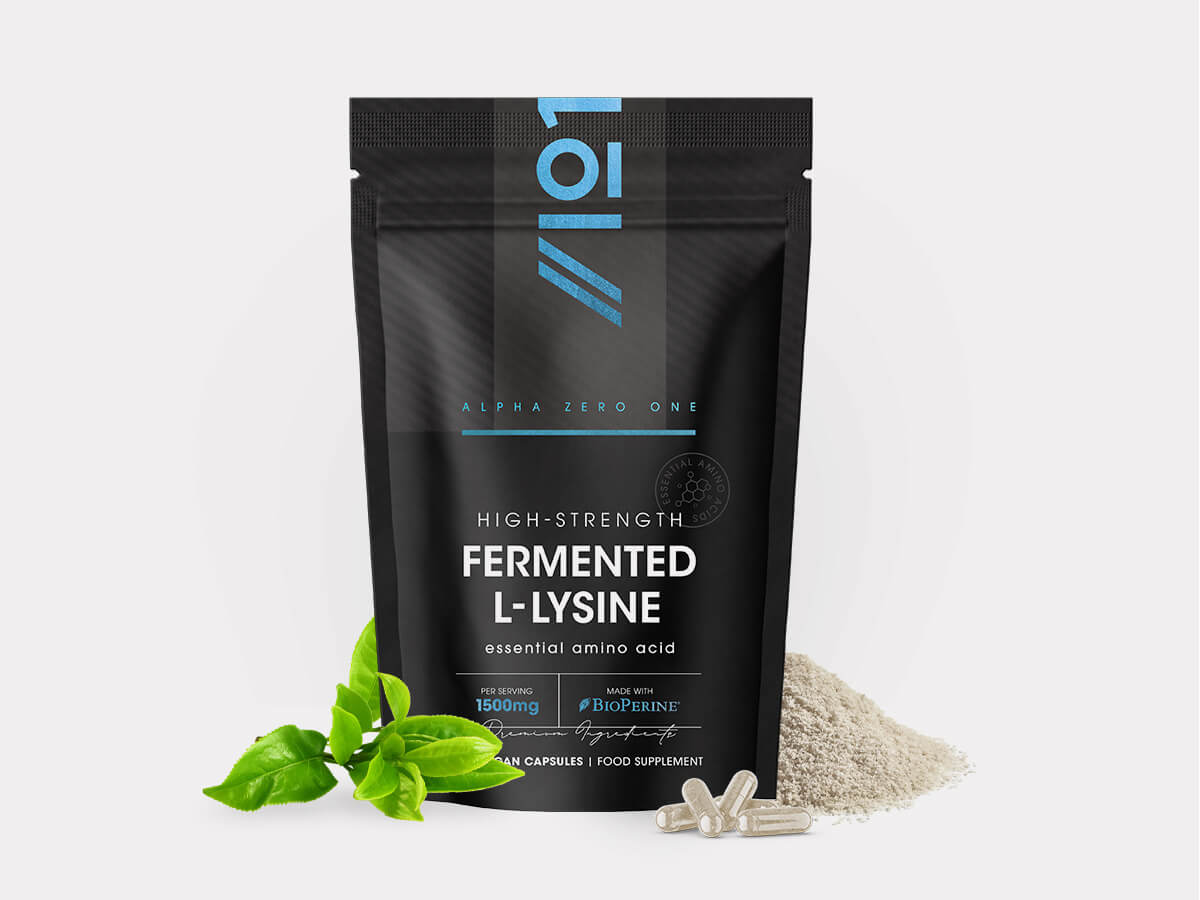
L-lysine capsules at a glance
- What it is: L-lysine, an essential amino acid, made by fermentation and not from animal protein.
- Three capsules: fermented L-lysine 1,500mg, vitamin C 150mg at 188% of the daily reference, and black pepper extract 5mg.
- What is authorised: vitamin C contributes to normal energy-yielding metabolism and to normal psychological function [4].
- How to take it: on an empty stomach, at least half an hour before eating, with water only.
- Format: a vegan hypromellose capsule.
- Price: £8.99 for 120 capsules, 40 days at about 22p a day.
L-LYSINE 1500MG · 120 VEGAN CAPSULES
£8.99 · 40 servings · 3 capsules a day with water, on an empty stomach · fermented L-lysine 1,500mg · vitamin C 150mg, 188% NRV · about 22p a day
SHOP NOW
What is lysine? An essential amino acid
Amino acids are the units that proteins are built from, and nine of them are called essential because the body cannot make them. Lysine is one of the nine, and the L in its name marks the natural form found in proteins [2].
Foods high in lysine, and the one food group that is not
Lysine is plentiful in meat, fish, eggs, dairy foods and pulses. Cereal grains hold comparatively little, which is why lysine supplements and lysine-fortified cereals have long been used where grain is the everyday staple [2]. If your diet is plant-based, our fermented lysine comes in a vegan capsule.
Fermented L-lysine: made by a bacterium, not from meat
Almost all lysine today is made by fermentation with the bacterium Corynebacterium glutamicum [3]. That is what fermented L-lysine means on our ingredients list, and it is why the capsules can be vegan.
L-lysine 1500mg on the label: three capsules, and a line of vitamin C
The panel lists three lines for a serving of three capsules: vitamin C 150mg at 188%, fermented L-lysine 1,500mg and black pepper extract 5mg. The two asterisks beside the last two mean no NRV established, because reference values exist only for vitamins and minerals.

1,500mg ÷ 3 capsules = 500mg of lysine in each · vitamin C 150mg ÷ 80mg = 188% · 120 capsules ÷ 3 = 40 days · £8.99 ÷ 40 = about 22p a day.
L-Lysine 1500mg, nutrition panel and price [1]
So each capsule holds 500mg of lysine, and the 1500mg on the front is the day’s three capsules together. It is also the figure to use when you weigh up our capsules against our tablets: 1,500mg in three capsules, or 1,000mg in one tablet [1].
Vitamin C beside the lysine: the one line with authorised claims
Each serving gives you 150mg of vitamin C, enough to carry fourteen authorised health claims. We’ve listed them below, word for word [4].
- Vitamin C contributes to the reduction of tiredness and fatigue.
- Vitamin C contributes to normal energy-yielding metabolism.
- Vitamin C contributes to the normal function of the immune system.
- Vitamin C contributes to normal collagen formation for the normal function of blood vessels.
- Vitamin C contributes to normal collagen formation for the normal function of bones.
- Vitamin C contributes to normal collagen formation for the normal function of cartilage.
- Vitamin C contributes to normal collagen formation for the normal function of gums.
- Vitamin C contributes to normal collagen formation for the normal function of skin.
- Vitamin C contributes to normal collagen formation for the normal function of teeth.
- Vitamin C contributes to normal functioning of the nervous system.
- Vitamin C contributes to normal psychological function.
- Vitamin C contributes to the protection of cells from oxidative stress.
- Vitamin C contributes to the regeneration of the reduced form of vitamin E.
- Vitamin C increases iron absorption.
Every health claim on the Great Britain register passed a scientific review: independent scientists examined the research and the evidence behind it before it was authorised [4]. The law itself says that health claims shall be “based on and substantiated by generally accepted scientific evidence” [5].
Lysine capsules or lysine tablets: which is right for you?
Our lysine supplements come in two forms: a vegan capsule with vitamin C, and a tablet. They differ in the serving, the price and what you swallow.
Lysine capsules: fermented L-lysine with vitamin C
If you want a vegan capsule with vitamin C on the same panel, our L-Lysine 1500mg capsules give 1,500mg in three capsules for about 22p a day. The same capsule also comes in a smaller 60-capsule pouch, a 20-day supply at about 30p a day.
Lysine tablets: one a day for about 10p
If you would rather swallow one tablet than three capsules, our L-Lysine 1000mg tablets cost about 10p a day. Their panel declares 1,000mg of L-lysine, and the ingredients list names L-lysine hydrochloride as its source [1].
L-LYSINE 1000MG · 60 TABLETS
£5.99 · 60 servings · 1 tablet a day with water, on an empty stomach · L-lysine 1,000mg · about 10p a day
SHOP NOW
Here are the labels side by side. Prices are correct at the time of writing.
3 capsules · fermented L-lysine 1,500mg · vitamin C 150mg, 188% NRV · black pepper extract 5mg · vegan capsule
Choose if you want lysine with vitamin C in a vegan capsule · 40 days · £8.99: about 22p a day · 60 capsules about 30p a day
1 tablet · L-lysine 1,000mg, from L-lysine hydrochloride · black pepper extract 1mg · coated tablet
Choose if you would rather take one tablet than three capsules, at the lower price · 60 days · £5.99: about 10p a day
You’ll find all three in our L-lysine range, part of our wider amino acids and sport and fitness collections.
Lysine with all nine essential amino acids
Want lysine alongside the other eight essential amino acids? Our Essential Amino Acids All 9 capsules give you all nine, 2,800mg in a four-capsule serving, including 410mg of L-lysine HCl [1].
The 180-capsule pouch holds 45 servings for £11.99, about 27p a day, and the smaller 90-capsule pouch holds 22 servings for £6.99 [1]. Our essential amino acids guide explains what each of the nine is.
How to take lysine: an empty stomach and water only
For our capsules, the label gives two directions: “Take 3 capsules per day, on an empty stomach at least half an hour before eating,” and use only water, “not milk or any other protein-containing drinks as this may affect absorption.” [1] The tablet label asks for the same, with one tablet a day [1].
40 days of fermented L-lysine
If three capsules before breakfast suits your routine, a pouch of 120 covers 40 days at about 22p a day.
SHOP L-LYSINE 1500MG CAPSULES
L-lysine FAQs
1. What are the benefits of lysine supplements?
The 150mg of vitamin C in our capsules brings fourteen authorised health claims, among them: vitamin C contributes to the reduction of tiredness and fatigue, to the normal function of the immune system and to normal psychological function [4]. You can read all fourteen, word for word, in the label section above. For lysine itself, the Great Britain register authorises no health claim, so we make none.
2. What is lysine found in?
Meat, fish, eggs, dairy foods and pulses all supply it. Cereal grains hold comparatively little [2].
3. What does fermented L-lysine mean?
It means the lysine was made by fermentation, using the bacterium Corynebacterium glutamicum, and not taken from animal protein [3]. It is how almost all lysine is produced today.
4. Why take lysine on an empty stomach?
Our label asks for it: take lysine on an empty stomach, at least half an hour before eating, with water only, “not milk or any other protein-containing drinks as this may affect absorption.” [1] To make it easy to remember, you could take it first thing in the morning, before breakfast.
5. Are lysine capsules vegan?
Yes. The lysine is made by fermentation, the capsule shell is plant-derived hypromellose, and the pouch front says vegan capsules. You’ll find them in our vegan range.
6. What does essential amino acid mean?
It means your body cannot make lysine for itself, so it has to come from what you eat or from a supplement. Our capsules give a labelled 1,500mg in a day’s serving, and you’ll also find lysine with the other eight in our Essential Amino Acids All 9 capsules [1].
7. Can I take lysine every day?
The label gives a daily amount, so it is made for daily use, and you should not exceed it. It is not intended for children, or for pregnant or breastfeeding women, and if you have a medical condition or take medication, the label asks you to consult a doctor before use [1]. The 150mg of vitamin C in a serving is well under the NHS figure of less than 1,000mg a day from supplements [6].
8. Lysine tablets or capsules: which gives more lysine?
A serving of capsules declares 1,500mg of fermented L-lysine. The tablets declare 1,000mg of L-lysine in one tablet a day, and come in at the lower price.
If you want fermented lysine with vitamin C in a vegan capsule, take the L-Lysine 1500mg capsules at about 22p a day. If one tablet and the lower price matter more, choose the L-Lysine 1000mg tablets at about 10p a day. Whichever you pick, the routine is the same: take it with a glass of water at least half an hour before breakfast.
References
Checked against the product labels, the GB Nutrition and Health Claims Register, nhs.uk and the published papers cited below, September 2026.
[1] Alpha01. L-Lysine 1500mg (120 and 60 capsules), L-Lysine 1000mg (60 tablets) and Essential Amino Acids All 9 2800mg (180 and 90 capsules): pouch fronts, nutritional information panels, ingredients, suggested use, caution and prices. Accessed 2026-09-28. View Source
[2] Gunarathne R, Guan X, Feng T, Zhao Y, Lu J. L-lysine dietary supplementation for childhood and adolescent growth: Promises and precautions. Journal of Advanced Research. 2025;70:571-586. View Source
[3] Liu J, Xu JZ, Rao ZM, Zhang WG. Industrial production of L-lysine in Corynebacterium glutamicum: Progress and prospects. Microbiological Research. 2022;262:127101. View Source
[4] Department of Health and Social Care. Great Britain nutrition and health claims (NHC) register, GOV.UK (lysine entries non-authorised; vitamin C entries authorised). Accessed 2026-09-20. View Source
[5] Regulation (EC) No 1924/2006 on nutrition and health claims made on foods, Article 6: scientific substantiation for claims, as it applies in Great Britain. legislation.gov.uk. Accessed 2026-09-25. View Source
[6] Vitamins and minerals: vitamin C – NHS. Accessed 2026-09-20. View Source


