If you’ve eaten corn, carrots or eggs, you’re already familiar with lutein and zeaxanthin: they are the natural pigments that give these foods their characteristic yellow and orange colours [2]. In supplements, this colour often comes from the marigold flower, but this is where the numbers on a label can create confusion. The amount of marigold extract in a capsule is not the same as the amount of lutein it provides. An extract is simply a concentrated form, and its value lies in the percentage of lutein it has been standardised to hold. This guide is here to explain precisely what that means, focusing on the 40mg of lutein on our pouch [4].
Choosing a supplement can feel overwhelming, especially when every label seems to present different numbers. Here is how to read those figures, how much lutein you get in each capsule and which pouch fits your routine.
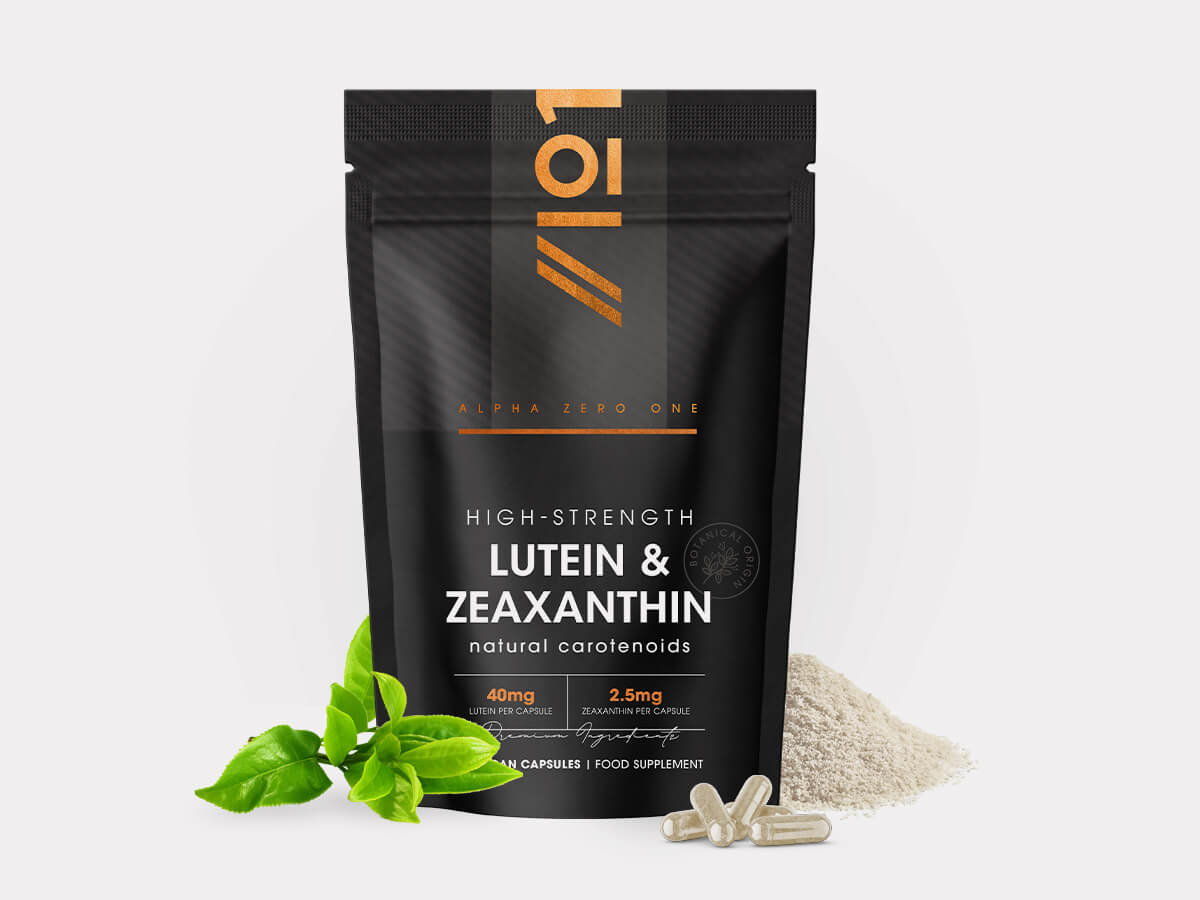
Lutein and zeaxanthin at a glance
- What they are: two yellow plant pigments, taken here from marigold flower extract [4].
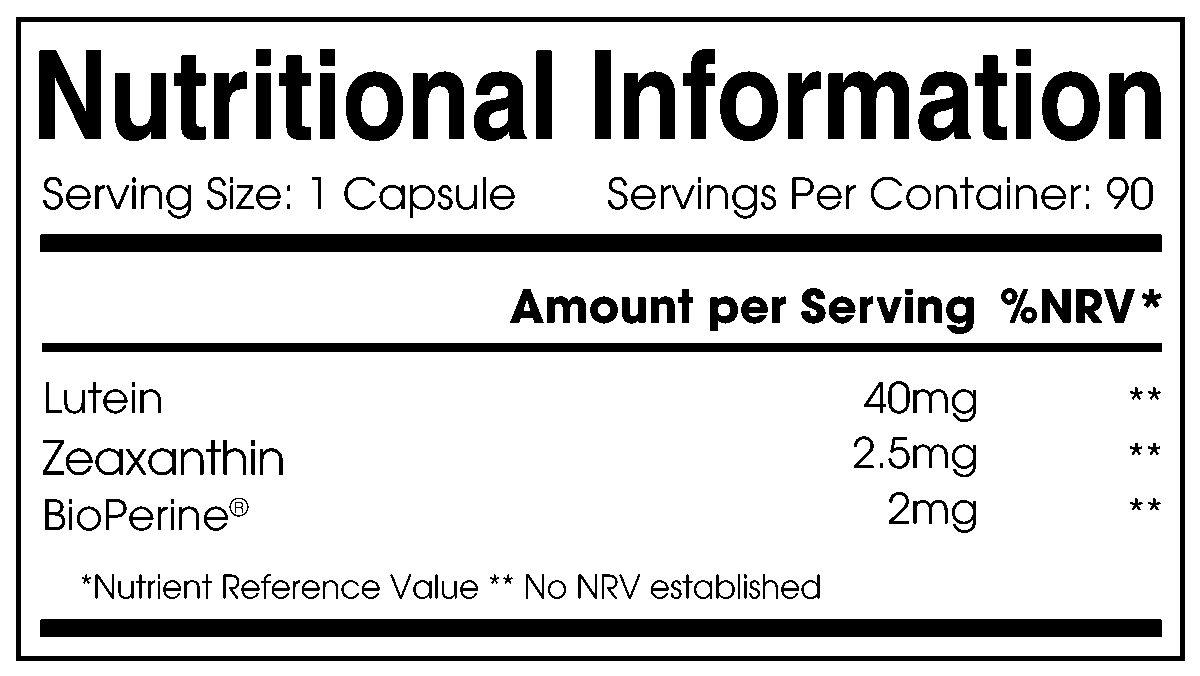
- One capsule: 40mg of lutein, 2.5mg of zeaxanthin and 2mg of BioPerine black pepper extract.
- The extract: 50mg of marigold flower extract standardised to 80% lutein and 5% zeaxanthin.
- Price: 90 capsules for £8.99, about 10p a day, or 180 capsules for £14.99, about 8p a day.
- The organic alternative: two capsules give 50mg of lutein and 3mg of zeaxanthin from 1,000mg of organic marigold extract, for about 22p a day.
- Who they suit: you, if you want lutein and zeaxanthin in one small capsule a day, with both amounts printed on the front of the pouch.
LUTEIN AND ZEAXANTHIN 40MG · 90 VEGAN CAPSULES
£8.99 · 90 servings · 1 capsule daily with water · lutein 40mg · zeaxanthin 2.5mg · from marigold flower extract · about 10p a day
SHOP NOW
Which lutein and zeaxanthin supplement is right for you?
Two paths, one pigment. We make a standard capsule in two pouch sizes, which packs more lutein into less extract, and a certified organic capsule, which gives you 50mg of lutein a day from organic marigold.
Lutein 40mg capsules: one small capsule a day
Just looking for a simple, one-a-day capsule? Our Lutein and Zeaxanthin 40mg gives 40mg of lutein and 2.5mg of zeaxanthin in each capsule, and the 90 pouch lasts three months at about 10p a day.
Lutein capsules for six months: the 180 pouch
Already know it suits your routine? The 180 pouch holds six months of the same capsule and brings the price down to about 8p a day.
LUTEIN AND ZEAXANTHIN 40MG · 180 VEGAN CAPSULES
£14.99 · 180 servings · the same capsule, six months in one pouch · about 8p a day
SHOP NOW
Organic lutein and zeaxanthin: a 5% extract, two capsules
Or is an organic supplement more your cup of tea? Our Organic Lutein and Zeaxanthin belongs to our organic range and uses 1,000mg of organic marigold flower extract standardised to 5% lutein, which gives 50mg of lutein and 3mg of zeaxanthin in two capsules.
The pouch carries the EU organic leaf with the code SK-BIO-003 printed below it. The capsules contain no black pepper extract, and a day costs about 22p.
All three sit in our lutein and zeaxanthin range, among our specialty supplements. Another carotenoid, the red one from algae, has a guide of its own: our astaxanthin guide.
Lutein 40mg on the label: what an 80% marigold extract means
Flip the pouch over and you’ll see how we get to the 40mg. It comes from marigold flower extract standardised to 80% lutein and 5% zeaxanthin. Standardised simply means every batch of extract is made to hold that share of lutein.
50mg of marigold extract × 80% = 40mg of lutein · 50mg × 5% = 2.5mg of zeaxanthin · 90 capsules = 90 days · £8.99 ÷ 90 = about 10p a day · £14.99 ÷ 180 = about 8p a day.
Lutein and Zeaxanthin 40mg, 90 Capsules, nutrition panel and ingredients [4]
An 80% extract is why the 40mg capsule can be small: 50mg of it carries 40mg of lutein and 2.5mg of zeaxanthin. By contrast, the organic extract is standardised to 5%, so it takes 1,000mg of extract, in two capsules, to provide 50mg of lutein.
You’ll see two asterisks beside every line on the panel. They mean no Nutrient Reference Value exists for lutein, zeaxanthin or BioPerine, so a label can’t show you a percentage of a daily need.
Lutein with BioPerine: why black pepper is on the panel
Wondering what BioPerine is? It’s a branded black pepper extract, and it is part of the 40mg formula, 2mg in each capsule. That is why it has its own line on the panel, so you can see exactly how much is there.
Lutein 40mg vs organic lutein 50mg: how they compare
The table puts our labels side by side: what each declares, and who it suits. Prices are correct at the time of writing.
1 capsule · lutein 40mg · zeaxanthin 2.5mg · from 50mg of marigold flower extract standardised to 80% lutein and 5% zeaxanthin · BioPerine black pepper extract 2mg · hypromellose shell
Choose if you want one small capsule a day · vegan · three months · £8.99: about 10p a day
the same capsule in a larger pouch
Choose if you already know it suits your routine · vegan · six months · £14.99: about 8p a day
2 capsules · lutein 50mg · zeaxanthin 3mg · from 1,000mg of organic marigold flower extract standardised to 5% lutein · organic brown rice flour · no black pepper extract
Choose if organic certification matters most to you · vegan · 45 days · £9.99: about 22p a day
How to compare any lutein and zeaxanthin supplement
Comparing another brand? Find the milligrams of lutein and of zeaxanthin in a daily serving, then how many capsules that serving is. Check the extract and its percentage, and divide the price by the days in the pouch.
What are lutein and zeaxanthin, and where do they come from?
Think of the orange of a carrot: that’s a carotenoid, and lutein and zeaxanthin belong to the same family of plant pigments. One scientific review describes them as pigments that give a yellow or orange colour to common foods such as corn, carrots, orange and yellow peppers, salmon and eggs [2].
Your body doesn’t make them, so whatever you have comes from your plate, or from a capsule with the amount printed on the pouch. The European Food Safety Authority calls lutein a normal constituent of the diet [3].
For supplements the usual source is the marigold flower, Tagetes erecta, whose petals are full of the same pigments [3].

How to take lutein and zeaxanthin capsules
Taking them is nice and easy. For the 40mg capsules, the label says one daily with water, and it names no time of day. For the organic ones it says two capsules daily.
Store the pouch in a cool, dry place out of direct sunlight, and keep it out of reach of young children.
None of the three is intended for children. The 40mg capsules are not intended for pregnant or breastfeeding women, and the organic label asks them to speak to a doctor before use.
A marigold pigment, in a label you can read
Now you know how to read the label, choosing is simpler. If a straightforward, one-a-day capsule at about 10p a day feels right, the 90 pouch covers three months.
SHOP LUTEIN AND ZEAXANTHIN
Lutein and zeaxanthin FAQs
1. What are the benefits of lutein and zeaxanthin supplements?
No health claim for lutein or zeaxanthin is authorised in the UK, so we make none [1]. One capsule gives you 40mg of lutein and 2.5mg of zeaxanthin from marigold flower extract standardised to 80% lutein, for about 10p a day.
2. How much is in each of your lutein capsules?
Each capsule of the 40mg product holds 40mg of lutein, 2.5mg of zeaxanthin and 2mg of BioPerine. The organic product gives 50mg of lutein and 3mg of zeaxanthin across two capsules.
3. Which foods contain lutein and zeaxanthin?
They colour corn, carrots, orange and yellow peppers, salmon and eggs, according to one scientific review [2]. A supplement adds a fixed, labelled amount on top of your food.
4. Why is there BioPerine in your lutein capsules?
BioPerine is a branded black pepper extract, and each capsule of the 40mg product holds 2mg of it, printed on the panel beside the lutein. If you’d prefer a capsule without it, the organic capsules have no black pepper extract.
5. Are your lutein and zeaxanthin capsules vegan?
Yes. The front of the pouch says vegan capsules, the shell is hypromellose, which is plant-derived, and the filler is organic brown rice flour. All three products belong to our vegan range.
6. Can I take lutein and zeaxanthin every day?
Yes, that is how the label sets it: one capsule a day from the 40mg pouch, or two from the organic one. The 90 pouch covers three months, the 180 pouch six months and the organic pouch 45 days.
7. What is the difference between lutein 40mg and organic lutein 50mg?
The extract. The 40mg capsule uses 50mg of an 80% extract, and the organic serving uses 1,000mg of a 5% organic extract across two capsules.
8. Is lutein from marigold extract the same as lutein in food?
It’s the same pigment [2]. Marigold petals are simply a concentrated source of it [3].
If you want one small capsule a day, choose the Lutein and Zeaxanthin 40mg, and take the 180 pouch once you know it suits you. If organic certification matters most, the Organic Lutein and Zeaxanthin gives 50mg in two capsules. Whichever you choose, you now know what the percentage on the back has to do with the number on the front.
References
Checked against the product labels and the GB Nutrition and Health Claims Register, September 2026.
[1] Department of Health and Social Care. Great Britain nutrition and health claims (NHC) register, GOV.UK (lutein and zeaxanthin entries, all non-authorised). Accessed 2026-09-25. View Source
[2] Abdel-Aal E-SM, Akhtar H, Zaheer K, Ali R. (2013). Dietary sources of lutein and zeaxanthin carotenoids and their role in eye health. Nutrients, 5(4):1169-85 (cited only for the description of the two pigments and the foods they colour; its statements about health are not used). PMC. View Source
[3] EFSA Panel on Food Additives and Nutrient Sources added to Food. (2010). Scientific Opinion on the re-evaluation of lutein (E 161b) as a food additive. EFSA Journal, 8(7):1678 (cited for the source plant and for lutein as a normal constituent of the diet). PMC. View Source
[4] Alpha01. Lutein and Zeaxanthin 40mg (90 and 180 capsules) and Organic Lutein and Zeaxanthin 50mg (90 capsules): nutritional information panels, pouch fronts, ingredients, suggested use, storage, caution and prices. Accessed 2026-09-25. View Source


