THE ALPHA01 GUIDE VITAMINS & MINERALS
Magnesium glycinate
vs citrate vs malate.Which should you take?
Three forms. Two numbers on the label. A clearer way to understand your magnesium.
Start with the three forms
Feeling that familiar energy dip in the afternoon, or looking for something to complement your regular training? This is often when people consider magnesium, a mineral that contributes to a reduction of tiredness and fatigue, to normal energy-yielding metabolism and to normal muscle function.1
The challenge begins when you try to choose a supplement. Glycinate, citrate, malate — and numbers like 1,800 mg and 400 mg on the same pack. This guide explains the forms, the label and the daily serving, so you can compare like with like.
Magnesium glycinate 3-in-1 at a glance
- Same mineral, different partners. Glycinate, citrate and malate describe what the magnesium is bound to.
- Compare elemental magnesium. The complex weight is not the amount of magnesium itself.
- Read the daily serving. Our 3-IN-1 provides 400 mg of magnesium in two capsules, not one.
01 / UNDERSTAND THE INGREDIENT
Types of magnesium explained: glycinate, citrate and malate
Magnesium in a supplement is combined with another substance. That partner gives each form its name — and contributes to the weight you see on the label.
01
Magnesium glycinate
Bound to glycine
Often called bisglycinate on the ingredients list. “Bis” refers to two glycine molecules; this is a chelated form.
02
Magnesium citrate
Bound to citric acid
A different magnesium compound. The citric acid partner contributes to the compound’s total weight.
03
Magnesium malate
Bound to malic acid
The malic acid partner gives this form its name. Again, compound weight and magnesium content are different numbers.
The symbols illustrate a shared mineral with different partners; they are not molecular structures.
The partner changes the weight of the compound. That is why the same 400 mg of magnesium comes from 1,800 mg of the 3-IN-1 complex, but from 2,000 mg of bisglycinate in our Chelated capsules.
02 / READ THE LABEL
Elemental magnesium: what 1,800mg and 400mg mean on the label
The first number is the weight of the whole magnesium complex. The second is the magnesium itself, often called elemental magnesium. It is the number to look for when comparing supplements.
bisglycinate
malate
citrate
Reference Value
Compare the magnesium line.
Not just the biggest number.
03 / FIND YOUR FORMAT
How to compare magnesium supplements: our four capsules side by side
Look at the form, the number of capsules in a serving and the amount of elemental magnesium. Prices are per pack and per serving at the time of writing.
| Magnesium product | Daily serving | Elemental magnesium | Pack / value |
|---|---|---|---|
| Magnesium Glycinate 3-IN-1 90 capsules · Bisglycinate, citrate & malate | 2 capsules | 400 mg107% NRV | £5.99 / 45 servingsAbout 13p per serving |
| Magnesium Glycinate 3-IN-1 180 capsules · Bisglycinate, citrate & malate | 2 capsules | 400 mg107% NRV | £9.99 / 90 servingsAbout 11p per serving |
| Chelated Magnesium 90 capsules · Bisglycinate only | 3 capsules | 400 mg107% NRV | £7.99 / 30 servingsAbout 27p per serving |
| Dead Sea Magnesium Citrate 90 capsules · Citrate + 2 mg BioPerine | 2 capsulesPreferably with food | 440 mg117% NRV | £5.99 / 45 servingsAbout 13p per serving |
NRV = Nutrient Reference Value. Per-serving prices are rounded. The 440 mg citrate serving exceeds the NHS’s 400 mg-or-less supplement advice; see the note below.
All four capsules sit in our magnesium range, part of our minerals collection. The mineral itself has its own magnesium guide, and calcium, magnesium and zinc in one tablet is covered in our triple mineral guide.
Which magnesium is right for you? A blend or a single form
The 3-IN-1 combines bisglycinate, citrate and malate. Two capsules contain 1,000 mg bisglycinate, 400 mg malate and 400 mg citrate, providing 400 mg of elemental magnesium. The 90- and 180-capsule packs use the same formula.
If you prefer bisglycinate on its own, the Chelated Magnesium formula provides 400 mg of magnesium from 2,000 mg of bisglycinate in three capsules. Dead Sea Magnesium Citrate provides 440 mg of magnesium in two capsules, with 2 mg of BioPerine black pepper extract. Its label suggests taking it with food. The citrate also comes in a 180-capsule pouch at about 13p a serving.
Already taking a multivitamin or a combination product?
Check that label too. Our Calcium Magnesium Zinc tablets give 250 mg of magnesium in one tablet, our MultiVitamin & Minerals 56.25 mg in one tablet and our Women’s Multivitamins 100 mg in two tablets, the daily serving of each. These amounts count towards your total from supplements.6
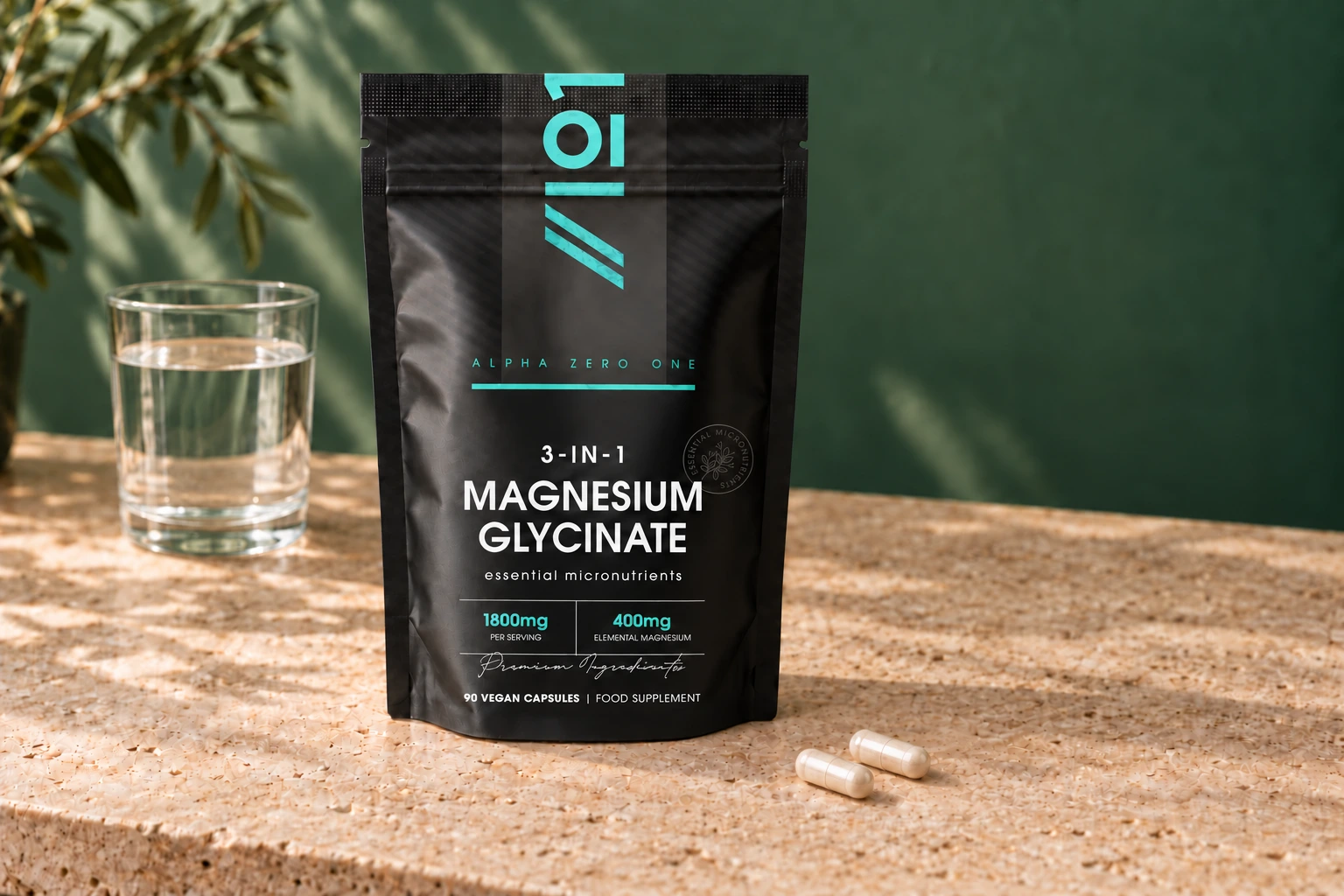
THREE FORMS, ONE FORMULA
Magnesium Glycinate 3-IN-1
400 mg elemental magnesium.
Two capsules per daily serving.
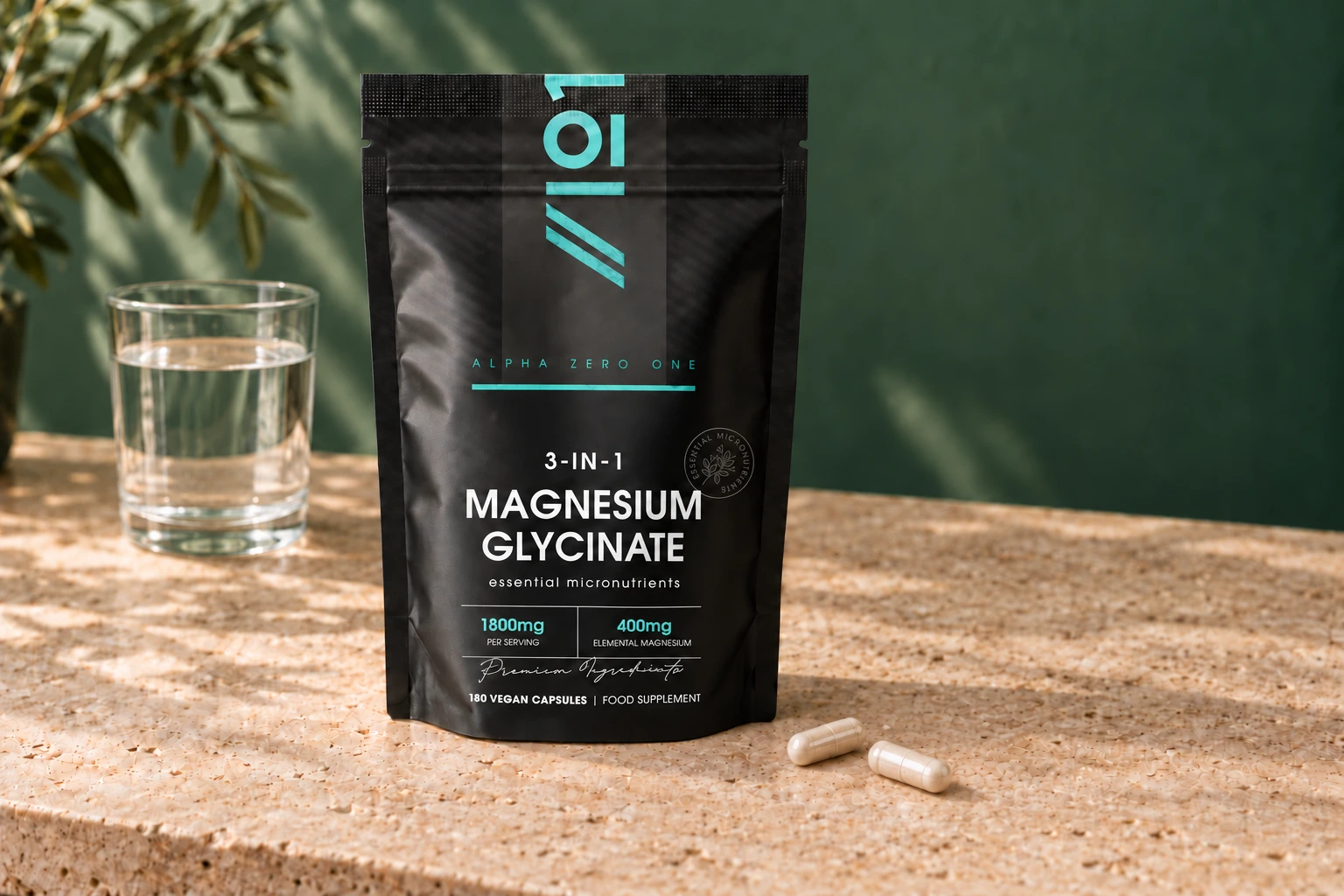
THE SAME BLEND, A BIGGER PACK
Magnesium Glycinate 3-IN-1
400 mg elemental magnesium.
Two capsules per daily serving.
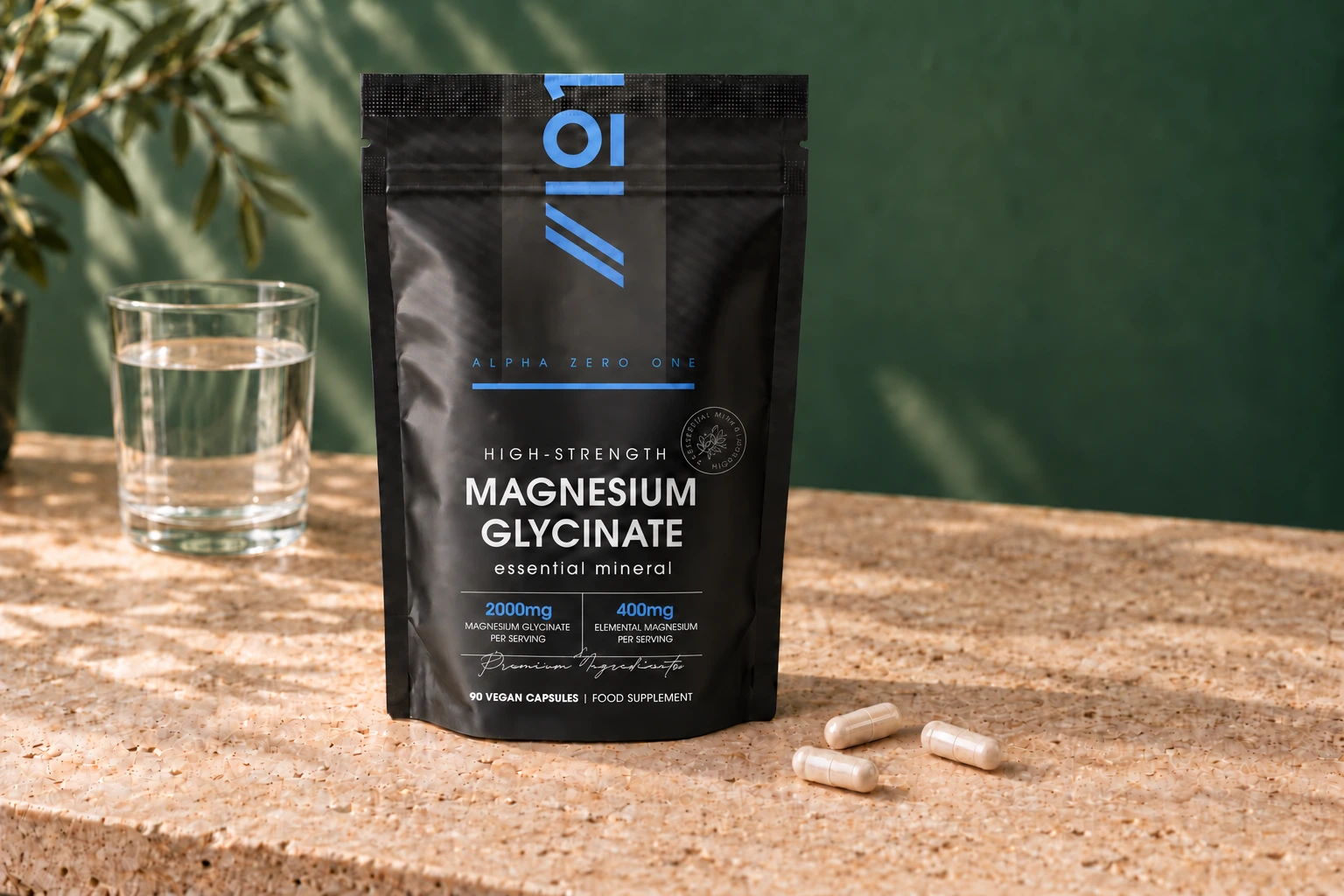
MAGNESIUM BISGLYCINATE
Chelated Magnesium
400 mg elemental magnesium.
Three capsules per daily serving.
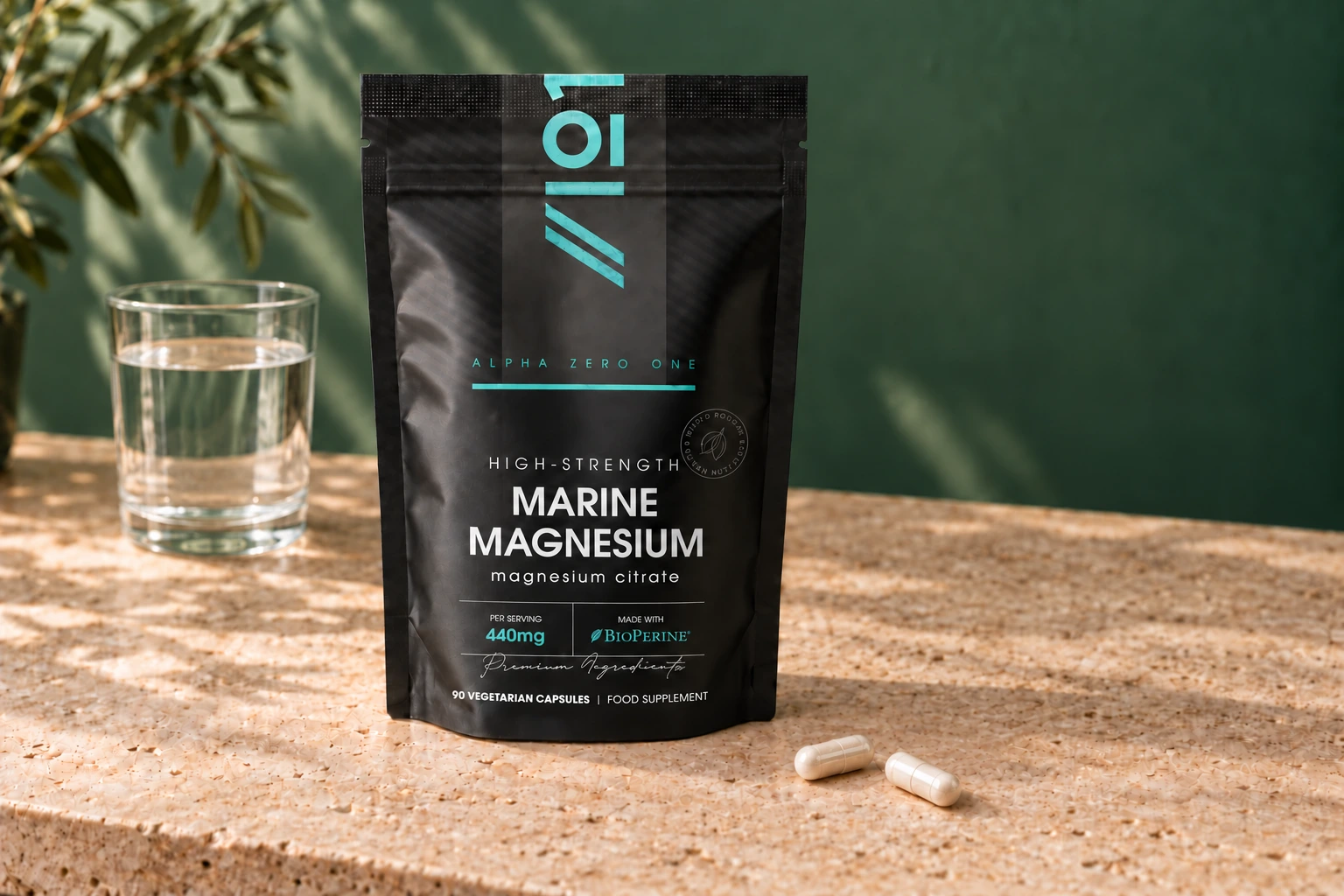
CITRATE + BIOPERINE
Dead Sea Magnesium Citrate
440 mg elemental magnesium.
Two capsules per daily serving.
04 / THE ROLE OF MAGNESIUM
Magnesium Glycinate Benefits
What are the benefits of magnesium glycinate? The ten claims allowed in the UK, all of them for its magnesium:
Every authorised health claim on the Great Britain register passed a scientific review: independent scientists examined the research and the evidence behind it before it was authorised.1 The law itself says that health claims shall be “based on and substantiated by generally accepted scientific evidence”.7
These magnesium health claims may be used only when the supplement qualifies as a source of magnesium: at least 15% of the NRV per daily serving, which is 56.25 mg for magnesium.14 Each of our four magnesium products provides 400 mg or more per daily serving, and all ten statements apply in full at that amount, word for word. They are made for magnesium itself, not for glycinate, citrate or malate as separate forms.
- Magnesium contributes to a reduction of tiredness and fatigue. Magnesium contributes to normal energy-yielding metabolism.
- Magnesium contributes to electrolyte balance.
- Magnesium contributes to normal muscle function.
- Magnesium contributes to normal functioning of the nervous system. Magnesium contributes to normal psychological function.
- Magnesium contributes to normal protein synthesis.
- Magnesium contributes to the maintenance of normal bones.
- Magnesium contributes to the maintenance of normal teeth.
- Magnesium has a role in the process of cell division.
START WITH YOUR DIET
Tired all the time? What the NHS says
The NHS names spinach, nuts and wholemeal bread as good sources of magnesium, and says adults aged 19 to 64 need 300 mg a day for men and 270 mg a day for women.2
If you are tired all the time and do not know why, the NHS advises you not to self-diagnose and to see a GP if you are worried.3
05 / KEEP IT SIMPLE
How and when to take magnesium glycinate
The labels do not specify a morning or evening time. Follow the suggested use for your product, and choose a routine you can remember.
Check your serving
3-IN-1: two capsules daily with water. Chelated: three capsules daily with water. Citrate: two capsules daily, preferably with food.
Look at your other supplements
Combination products may already include magnesium. Add up the elemental magnesium per daily serving across the labels, rather than the complex weights.
Store it as directed
Keep the pack in a cool, dry place, away from direct sunlight and out of reach of children.
06 / A LITTLE MORE CLARITY
Magnesium glycinate FAQs
When should I take magnesium glycinate?
The labels do not name a time of day. The 3-IN-1 and Chelated labels say to take the capsules daily with water, and the citrate label suggests taking them with food, so pick the time you will remember and keep to it.
Can I take magnesium every day?
The labels give directions for daily use, but whether a supplement is suitable for you depends on your diet, other supplements and medicines. Follow the product label and the NHS advice above; speak to a pharmacist if you are unsure. At two capsules a day, a 90-capsule 3-IN-1 pack contains 45 servings and a 180-capsule pack contains 90.
What about magnesium for sleep?
You will often see magnesium discussed in connection with sleep. The Great Britain register lists no sleep claim for magnesium 1.
What it does authorise includes these two statements: Magnesium contributes to normal psychological function. Magnesium contributes to normal functioning of the nervous system. Our guide to magnesium for sleep answers the question in full.
Is magnesium glycinate the same as magnesium bisglycinate?
Yes, for the purpose of choosing a supplement, they mean the same thing. Bisglycinate is the more precise chemical name you will see in an ingredients list, while glycinate is the common name used on the front of a pouch.
How much magnesium is in 1,800mg of magnesium glycinate 3-IN-1?
400mg. The 1,800mg is the weight of the whole complex in two capsules: 1,000mg of bisglycinate, 400mg of malate and 400mg of citrate. The magnesium that complex provides is 400mg, 107% of the NRV.
Are your magnesium capsules vegan?
Yes. All four use a hypromellose capsule shell, which is plant-derived, none of their ingredients comes from an animal, and all four belong to our vegan range. The 3-IN-1 and Chelated capsules contain rice starch and safflower oil alongside the magnesium, and the citrate capsules also contain microcrystalline cellulose and black pepper extract.
Can I take magnesium with other supplements or medicines?
With other supplements, add up the magnesium on each label: every one of our panels prints it per serving, and the NHS figure is 400mg or less a day from supplements 2. With a prescription medicine, ask your pharmacist to check the label against it.
How long does magnesium take to work?
The authorised claims describe the everyday work magnesium does, such as its contribution to normal muscle function, so what matters is the routine: one serving a day, every day, as the labels direct.1 The 180-capsule pouch keeps that routine going for 90 days at about 11p a day.
GO TO THE SOURCE
Sources & references
Checked against the product labels and the GB Nutrition and Health Claims Register, September 2026. Product formulations, prices and guidance can change.
- Great Britain nutrition and health claims (NHC) register – GOV.UK (Department of Health and Social Care), magnesium entries. Accessed 2026-09-17. View source
- Vitamins and minerals: Others, Magnesium – NHS (what it does, sources, daily amounts, advice on supplements). Accessed 2026-09-17. View source
- Tiredness and fatigue – NHS. Accessed 2026-09-17. View source
- Nutrition and health claims: guidance to compliance with Regulation (EC) 1924/2006 – GOV.UK. View source
- Alpha01. Magnesium Glycinate 3-IN-1 1800mg, 90 Capsules: nutritional information panel, ingredients, suggested use, storage, caution and price (accessed 2026-09-17). View source
- Alpha01. Calcium Magnesium Zinc 450mg, 90 Tablets; MultiVitamin & Minerals, 90 Tablets; Women’s Multivitamins, 90 Tablets: nutritional information panels (magnesium per serving), accessed 2026-09-25. View source
- Regulation (EC) No 1924/2006 on nutrition and health claims made on foods, Article 6: scientific substantiation for claims, as it applies in Great Britain. legislation.gov.uk. Accessed 2026-09-25. View source