Ask a British gardener about Japanese knotweed and you will hear a story of dread. It is the most common of the four invasive knotweeds in the UK, it spreads by its rhizome, a new plant can grow from a piece of that rhizome as small as 1cm, and it usually takes at least three years to treat [3]. The same stubborn root is also where many resveratrol supplements begin [2]. Resveratrol is a compound some plants make when they are under attack, from injury, fungal infection or ultraviolet light, and it turns up in peanuts, some berries and the skins of grapes [2]. Knotweed root contains it too, and that is why the plant gardeners fight is the plant supplement makers seek out.
Our supplement is a straightforward one-a-day capsule made from that same plant, and the label tells you exactly what is inside: natural trans-resveratrol 150mg on the panel, and Japanese knotweed 50:1 extract (50% trans-resveratrol) in the ingredients [4]. This guide walks you through what trans-resveratrol is and why it comes from knotweed, then explains what 50:1 and 50% mean on our label and what one capsule a day costs.
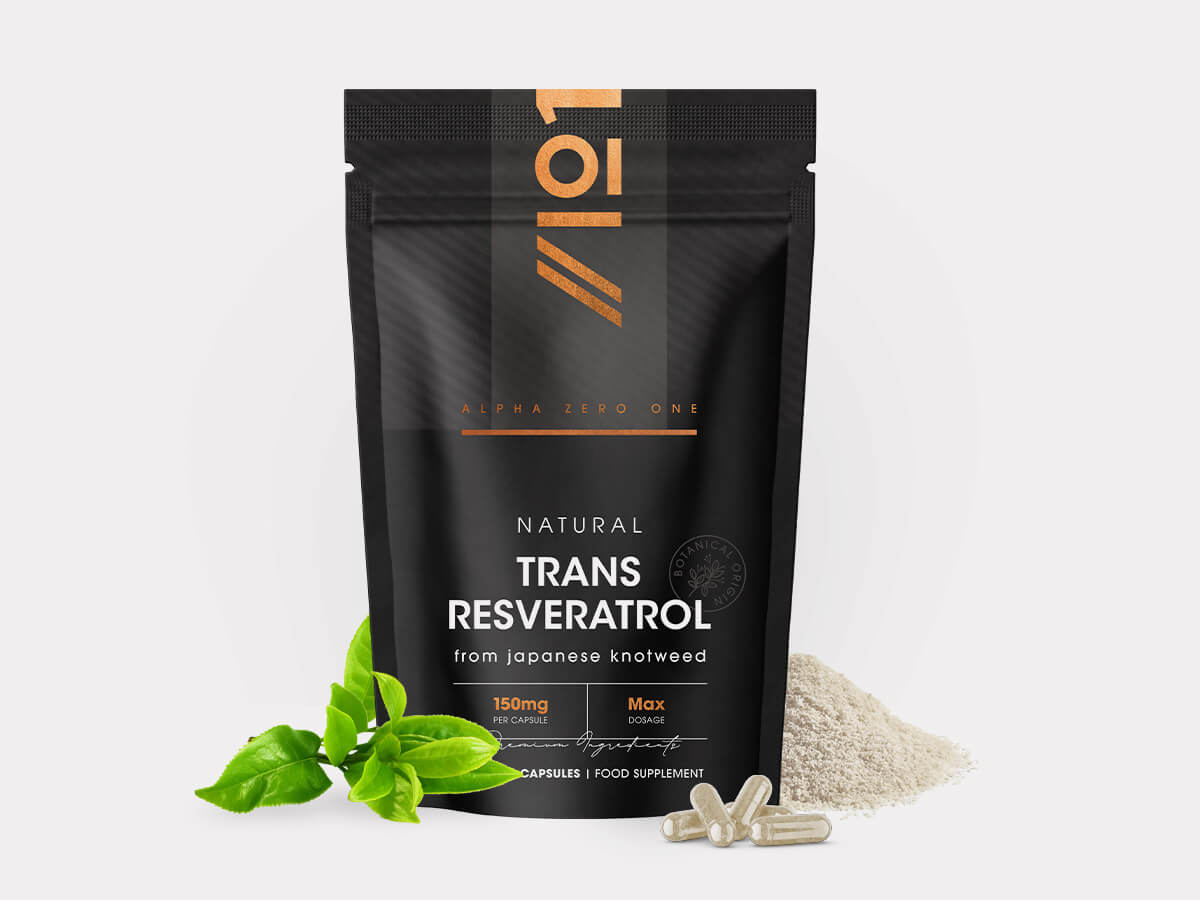
Trans-resveratrol at a glance
- What it is: natural trans-resveratrol, 150mg in one capsule, from a 50:1 Japanese knotweed extract standardised to 50% trans-resveratrol.
- Who it suits: you, if you want a measured amount of natural trans-resveratrol in a simple once-a-day routine.
- Ingredients: Japanese knotweed 50:1 extract, organic hemp flour and a hypromellose capsule shell.
- How to take it: one capsule a day with water.
- Price: £8.99 for 90 capsules, 90 days at about 10p a day.
TRANS-RESVERATROL · 150MG · 90 CAPSULES
£8.99 · 90 capsules · 1 capsule a day with water · natural trans-resveratrol 150mg from a 50:1 Japanese knotweed extract · about 10p a day
SHOP NOW
What is resveratrol? A stilbene plants make under attack
Resveratrol belongs to a family of plant compounds called stilbenes, and plants make it in response to stress: injury, fungal infection or ultraviolet radiation [2].
Resveratrol in grapes and red wine: only in the skin
In grapes, resveratrol is found only in the skins, which is how it comes to be in red wine, where the skins stay in contact with the juice [2]. It also occurs in peanuts and some berries, in small amounts.
Japanese knotweed: the root behind resveratrol capsules
Many resveratrol supplements are made from the root of the Japanese knotweed plant (Polygonum cuspidatum or Fallopia japonica) [2]. In Chinese, the plant is known as Hu Zhang.
“Japanese knotweed is the most common of 4 invasive knotweed plant species in the UK.”
How to stop Japanese knotweed from spreading [3]
Its rhizome can lie dormant in the soil for many years, ready to regrow when disturbed [3]. For a supplement, that same hardy plant is made into an extract, and our label tells you exactly how much trans-resveratrol it gives you [4].
Natural trans-resveratrol on the label: 150mg from a 50:1 extract
The panel has one line: natural trans-resveratrol 150mg, from Japanese knotweed extract, with two asterisks that mean no NRV established [4].

150mg of trans-resveratrol ÷ 50% = 300mg of knotweed extract in the capsule · 300mg × 50 = 15,000mg of knotweed equivalent · £8.99 ÷ 90 = about 10p a day.
Trans-Resveratrol 150mg, nutrition panel, ingredients and price [4]
Types of resveratrol: trans or cis, and why the label says trans
Resveratrol exists in two shapes, trans and cis, which are different arrangements of the same atoms [2]. The label names trans-resveratrol, the form it measures, so the 150mg is the trans form alone.
What 50:1 extract and 50% mean together
The ingredients list reads Japanese knotweed 50:1 extract (50% trans-resveratrol) [4]. It is simpler than it looks: half of the 300mg of extract is trans-resveratrol, which is the 150mg on the panel, and the 50:1 ratio means those 300mg were made from 15,000mg of knotweed.
Resveratrol capsules: what our label tells you
Look at our label and you’ll see three things that tell you what you’re buying: the form, the extract and the amount [4].
Natural trans-resveratrol: the form, named on the panel
Our panel is specific about the form, natural trans-resveratrol, so you know exactly what the 150mg is [4].
50:1 extract and 50%: both on our label
The ratio simply tells you how much plant it took to make the extract, and the percentage tells you how much of the extract is the compound. Our label prints both, so you can check the 150mg on the panel against the ingredients list yourself [4].
150mg of trans-resveratrol: the amount and the price
Our Trans-Resveratrol 150mg capsules give 150mg of trans-resveratrol in one capsule a day, 90 days for £8.99, about 10p a day [4]. The filler is organic hemp flour and the shell is hypromellose.
You’ll find these capsules in our specialty supplements range, part of our wider vitamins and supplements collection. To see another plant compound explained through its label, take a look at our quercetin and bromelain guide.
How to take trans-resveratrol: one capsule a day with water
The directions are one line: take one capsule daily with water [4]. The label gives no time of day, so keep the pouch by a meal you never skip.
90 days of trans-resveratrol
If one capsule a day suits your routine, a pouch of 90 covers three months for £8.99, about 10p a day, with the form, the ratio and the percentage all printed on the label.
SHOP TRANS-RESVERATROL 150MG
Trans-resveratrol FAQs
1. What is trans-resveratrol good for?
No health claim is authorised for resveratrol on the Great Britain register, so we make none [1]. What the label promises is 150mg of natural trans-resveratrol from Japanese knotweed in one capsule a day.
2. What is the difference between trans-resveratrol and resveratrol?
Resveratrol is the compound, and it exists in two forms, trans and cis, with its atoms arranged differently [2]. Trans-resveratrol is the trans form, and it is the one you’ll find on our panel: 150mg in each capsule [4].
3. Why is resveratrol made from Japanese knotweed?
Because its root is where many resveratrol supplements begin [2]. It is the same plant GOV.UK calls the most common invasive knotweed in the UK [3].
4. Is there resveratrol in red wine?
Some, because resveratrol sits in grape skins, which stay with the juice when red wine is made [2]. A capsule declares its amount; a glass does not, and this guide is not a reason to drink.
5. Are trans-resveratrol capsules vegan?
Yes, they are. The extract comes from Japanese knotweed, the filler is organic hemp flour and the shell is hypromellose, a plant-derived cellulose. That’s why you’ll find them in our vegan range [4].
6. Can I take trans-resveratrol every day?
Yes. The label gives a daily amount of one capsule, so it is made for daily use; just don’t take more than the label says [4]. It is not intended for children, or pregnant or breastfeeding women, and if you have a medical condition or take any medication, the label asks you to consult a doctor before use [4].
7. How much does trans-resveratrol cost a day?
About 10p. A pouch of 90 capsules is £8.99, and one capsule is a day’s serving [4].
If you want trans-resveratrol with the form, the ratio and the percentage printed where you can check them, take the Trans-Resveratrol 150mg capsules, one a day, at about 10p. The 150mg of trans-resveratrol in each capsule comes from the plant gardeners fight, and every number on its label is explained above.
References
Checked against the product label, the GB Nutrition and Health Claims Register, GOV.UK and the Linus Pauling Institute, September 2026.
[1] Department of Health and Social Care. Great Britain nutrition and health claims (NHC) register, GOV.UK (no authorised claim for resveratrol). Accessed 2026-09-24. View Source
[2] Linus Pauling Institute, Oregon State University. Micronutrient Information Center: Resveratrol (cited only for composition, sources and supplement forms; its health statements are not used). Accessed 2026-09-24. View Source
[3] GOV.UK. How to stop Japanese knotweed from spreading. Accessed 2026-09-24. View Source
[4] Alpha01. Trans-Resveratrol 150mg, 90 Capsules: pouch front, nutrition information panel, ingredients, suggested use, caution and price. Label maths by the author. Accessed 2026-09-24. View Source


