Vitamin B1, also known as thiamine or thiamin, is one of the B vitamins. Your body is not able to make thiamine for itself[2]. Thiamine contributes to normal energy-yielding metabolism, to normal functioning of the nervous system, to normal psychological function and to the normal function of the heart[5].
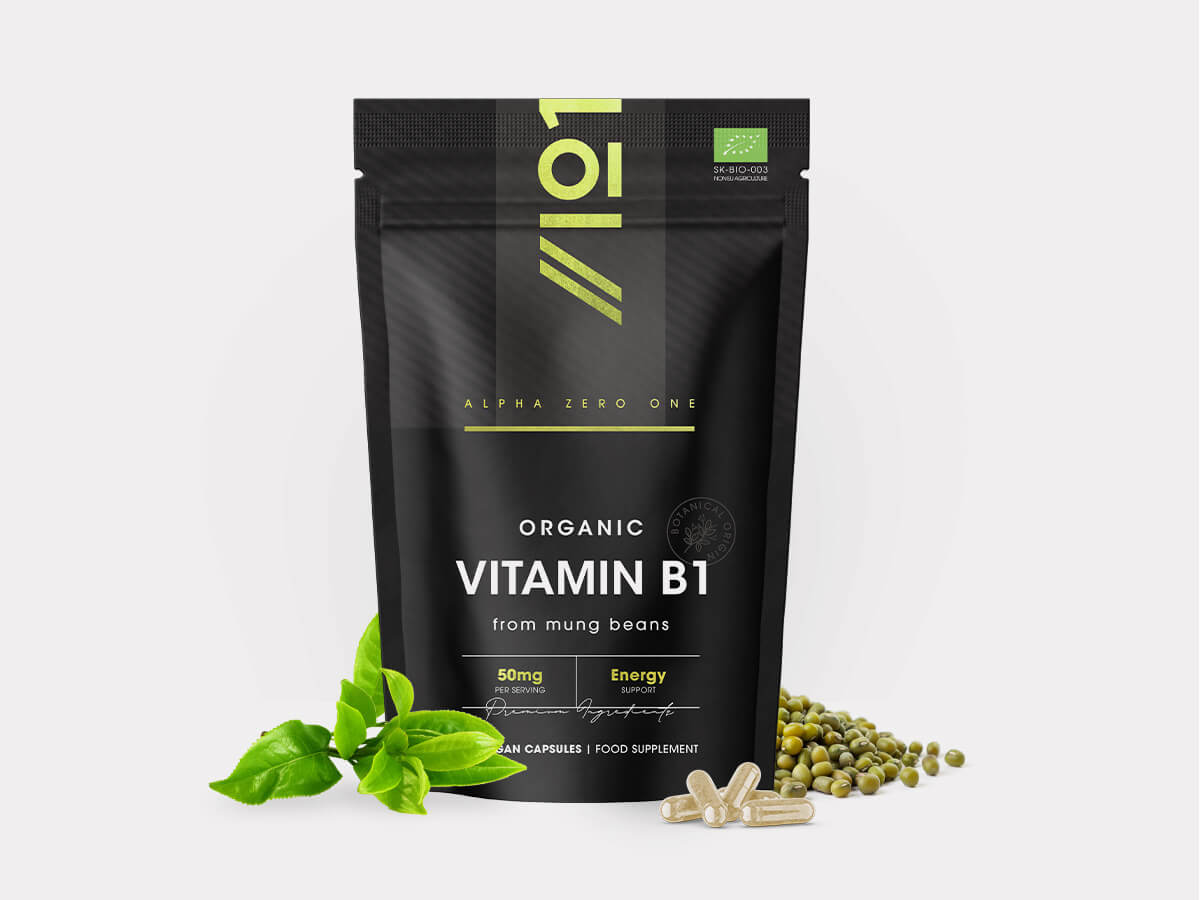
This guide sets out what thiamine does, what is in each of our two Vitamin B1 capsules and which one suits you.
VITAMIN B1 100MG – 90 CAPSULES
£5.99 · 90 servings · 100mg / Capsule
SHOP NOW
What Vitamin B1 Does: The Four Authorised Claims
The Great Britain Nutrition and Health Claims Register authorises four claims for thiamine: thiamine contributes to normal energy-yielding metabolism; thiamine contributes to normal functioning of the nervous system; thiamine contributes to normal psychological function; and thiamine contributes to the normal function of the heart. Each may be used only for a food that is at least a source of thiamine (15% of the nutrient reference value per daily portion), which both Alpha01 products are. Thiamine is a water-soluble vitamin[3].
Every health claim on the Great Britain register passed a scientific review: independent scientists examined the research and the evidence behind it before it was authorised. The law itself says that health claims shall be “based on and substantiated by generally accepted scientific evidence” (Regulation (EC) No 1924/2006, Article 6).
The nutrient reference value used on supplement labels is 1.1mg. To see every Alpha01 format, explore our Vitamin B1 range.
Key Functions of Vitamin B1
Thiamine: contributes to normal energy-yielding metabolism; contributes to normal functioning of the nervous system; contributes to normal psychological function; contributes to the normal function of the heart[5].
Which Vitamin B1 Is Right for You?
If you’re comparing the two forms — the Vitamin B1 100mg capsule uses thiamine hydrochloride: 100mg (9,091% NRV) per one-capsule serving, 90 vegan capsules (90 servings), £5.99. The Organic Vitamin B1 50mg capsule uses thiamine from sprouted mung beans: 50mg (4,545% NRV) per two-capsule serving, 60 vegan capsules (30 servings), £14.99. Both prices are at the time of writing[4].
If you want it organic — choose the Organic Vitamin B1 50mg: organic thiamine from sprouted mung bean, a hypromellose capsule shell and organic brown rice flour, nothing else. The 100mg capsule lists thiamine hydrochloride with a microcrystalline cellulose bulking agent, rice starch and safflower oil in the same hypromellose shell; both are suitable for vegans.
If you read labels — three lines tell you what you are buying: the thiamine per serving and its percentage of the 1.1mg nutrient reference value, the form (thiamine hydrochloride or organic mung-bean thiamine), and the serving size (one capsule or two capsules daily with water).
Alpha01 Vitamin B1 100mg Capsules
Our Vitamin B1 100mg – 90 Capsules provide 100mg of thiamine (as thiamine hydrochloride) per capsule, 9,091% of the nutrient reference value, in a hypromellose capsule suitable for vegans. Each resealable pouch contains 90 capsules (90 servings) and costs £5.99 at the time of writing. Thiamine contributes to normal energy-yielding metabolism, to normal functioning of the nervous system, to normal psychological function and to the normal function of the heart.
SHOP VITAMIN B1 100MG
Thiamine 100mg per capsule, 90 vegan capsules per pouch. Thiamine contributes to normal energy-yielding metabolism and to normal functioning of the nervous system. Take one capsule daily with water.
SHOP VITAMIN B1
Vitamin B1 FAQs
1. What are the benefits of Vitamin B1?
Thiamine contributes to normal energy-yielding metabolism, to normal functioning of the nervous system, to normal psychological function and to the normal function of the heart[5].
2. How much Vitamin B1 should I take daily?
The NHS says adults aged 19 to 64 need 1mg a day for men and 0.8mg a day for women. It also states that taking 100mg or less a day of thiamin supplements is unlikely to cause any harm[1]. If you take one of our Vitamin B1 products, follow the serving on the label and do not exceed it. The labels say neither product is intended for children, and ask you to consult a doctor before use if you are pregnant, breastfeeding, have a medical condition or are taking any medication.
3. Which foods contain Vitamin B1?
The NHS lists good sources of thiamin as peas, some fresh fruits (such as bananas and oranges), nuts, wholegrain breads, some fortified breakfast cereals and liver (avoid liver if you are pregnant)[1].
Vitamin B1 (thiamine) contributes to normal energy-yielding metabolism, to normal functioning of the nervous system, to normal psychological function and to the normal function of the heart. Alpha01 offers thiamine as 100mg capsules (90 per pouch) and as organic mung-bean thiamine at 50mg per two-capsule serving (60 per pouch); choose on the basis of form, amount and price.
References
[1] NHS. B vitamins and folic acid – Thiamin (vitamin B1) (accessed 2026-09-11). View Guide
[2] NHS. About thiamine (accessed 2026-09-11). View Guide
[3] Kaźmierczak-Barańska, J., Halczuk, K., & Karwowski, B. T. (2025). Thiamine (Vitamin B1) – An Essential Health Regulator. Nutrients, 17(13), 2206. View Abstract
[4] Alpha01. Vitamin B1 100mg – 90 Capsules and Organic Vitamin B1 50mg – 60 Capsules: ingredients, nutritional information, serving and price (accessed 2026-09-11). View Product
[5] Department of Health and Social Care. Great Britain nutrition and health claims (NHC) register, GOV.UK (accessed 2026-09-11). View Register


